we're online

Cost Comparison: LED Neon Signs vs Traditional Glass Neon Signs
When people compare illuminated signage, price is usually one of the first questions. The answer is not limited to the amount paid on the day of purchase. Installation, electricity, repairs, routine care, and expected service life can all affect the real cost of owning a sign.
A useful neon sign cost comparison therefore looks at the full ownership period rather than the initial quote alone. LED neon signs vs glass neon signs differ in how they are built, powered, installed, and repaired. For homeowners and businesses considering Neon Signs, those differences can influence the total budget over several years. Custom Neon Signs made with modern LED technology can also offer more flexibility in shape, color, and placement.
Upfront Cost: LED Neon vs Glass Neon
The initial custom neon sign price depends on size, design complexity, colors, materials, backing, and installation requirements. A simple sign will generally cost less than a large logo or detailed multi-color design, regardless of the technology.
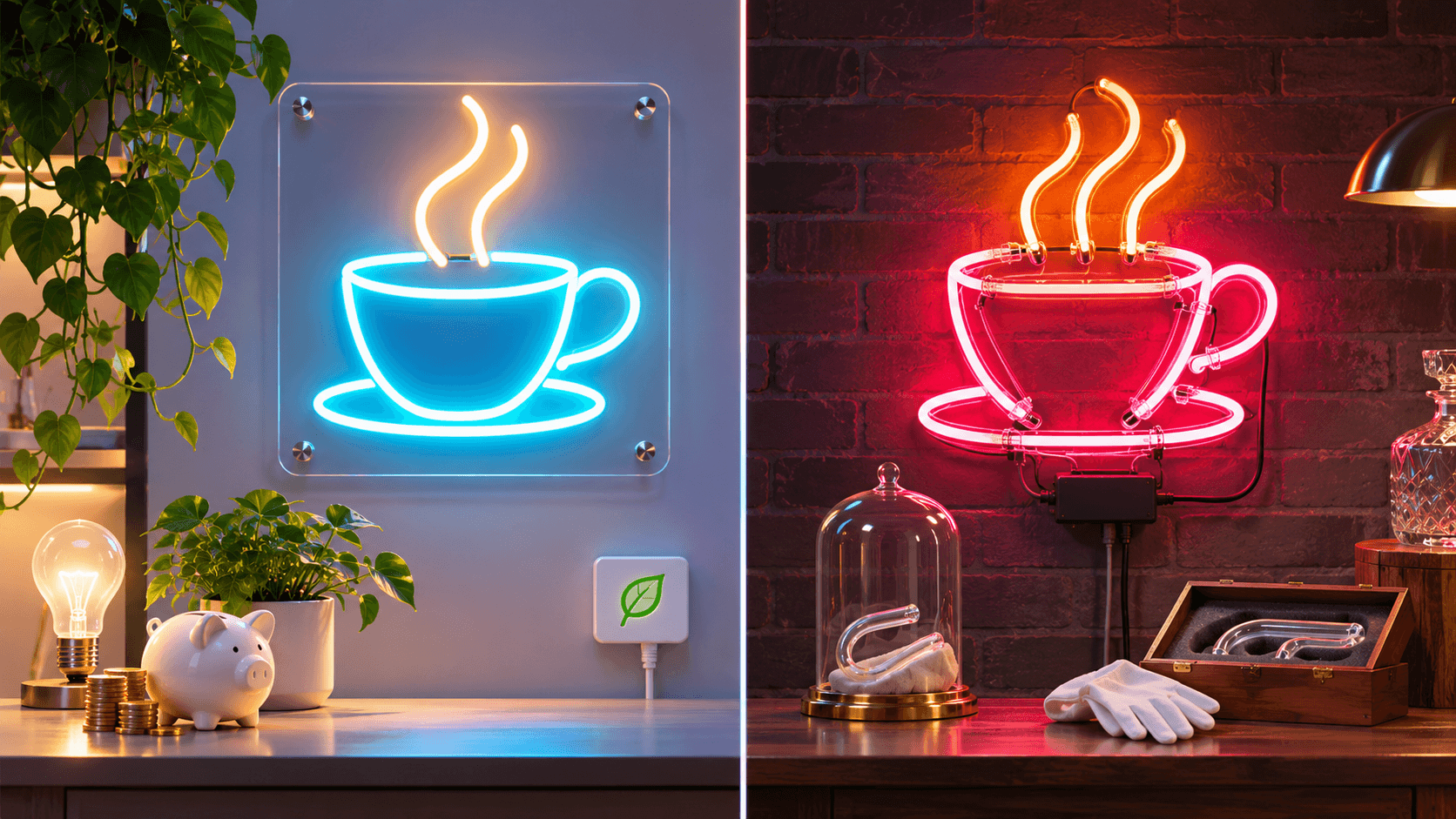
Traditional glass neon requires tubes to be heated, bent, filled with gas, and connected to electrical components. Much of this work is completed by skilled craftspeople. Complicated lettering or artwork can require several individual tube sections, which adds labor.
LED neon uses flexible lighting housed in materials such as silicone and mounted to a backing. Production can be more standardized, especially for text-based designs and repeatable shapes.
This is one reason people ask, are LED neon signs cheaper than glass? In many cases, LED versions can have a lower total starting cost, particularly when installation and supporting hardware are considered. Quotes should still be compared using the same dimensions and design.
Installation Costs Can Change the Final Price
A sign that is inexpensive to manufacture can become costly if installation is complicated.
Glass neon tubes are fragile and need careful transport and mounting. Traditional systems may also require transformers and specialized electrical work depending on the installation.
LED signs are generally lighter and easier to handle. Many indoor designs can be wall-mounted, suspended, or installed with relatively simple hardware. This can make them practical for bedrooms, home bars, retail interiors, events, and offices.
Before comparing prices, include mounting hardware, electrical access, professional labor, and any changes needed to the wall or storefront.
Energy Use Matters Over Time
The purchase price is only one part of a neon sign cost breakdown. Electricity becomes more important for signs that operate for many hours each day.
LED lighting is designed to produce illumination with relatively low energy consumption. This can be useful for businesses that keep signage illuminated throughout the evening or during long operating hours.
Traditional glass neon can also be efficient compared with some older forms of illuminated signage, but LED technology generally requires less power for comparable decorative applications.
The difference may be small for a sign used occasionally at home. For a restaurant, salon, store, or studio running signage daily, energy costs accumulate over time.
Maintenance and Repair Costs
Maintenance is another major difference in the LED neon vs glass neon calculation.
Glass tubes can break if they are hit, dropped, or handled incorrectly. A damaged section may need to be recreated by a specialist. The glass neon sign maintenance cost therefore depends on accessibility, sign complexity, and technician availability.
LED neon does not use fragile glass tubing. Routine care is usually focused on cleaning the sign, checking connections, and making sure the power supply remains in good condition.
LED signs can still require repairs, but servicing may be simpler in many common indoor applications.
How Lifespan Affects Long-Term Value
A cheaper sign is not necessarily better value if it needs frequent replacement. Lifespan should be considered alongside purchase price.
The LED neon sign lifespan depends on component quality, operating hours, heat, installation conditions, and maintenance. Well-made LED systems are designed for long operating periods, which is one reason they are common in commercial and decorative lighting.
Traditional glass neon can also last for many years when properly made and maintained. Its service life can be impressive, but breakage and component repairs may add costs along the way.
Rather than choosing based on an advertised lifespan alone, consider where the sign will be installed and how frequently it will run.
Design Complexity Can Affect Both Options
Not every neon design carries the same price.
A short word in one color is simpler to produce than a detailed business logo with several colors and separate elements. Size, letter height, curves, backing style, and mounting requirements can all affect cost.
Modern custom LED neon signs can be useful for names, phrases, logos, symbols, and decorative artwork because flexible lighting can follow many shapes. Businesses can also use Custom Neon Signs when they want signage created around a particular brand identity.
With traditional glass, highly detailed artwork may need to be simplified so it can be reproduced cleanly in bent tubing.
Shipping and Handling Are Part of the Comparison
Shipping is easy to overlook when comparing LED vs traditional neon signs.
Glass tubing requires careful packaging because impacts during transportation can cause damage. Large glass signs may need more protective materials or specialized handling.
LED signs are generally more resistant to everyday movement and transportation. This can be useful for events, exhibitions, or businesses that may relocate signage.
If a sign needs to travel regularly, durability during transport can affect the long-term cost.
Which Type Makes More Financial Sense?
Traditional glass neon has a distinct appearance and is often chosen for vintage interiors, restoration projects, art installations, and places where authentic glass craftsmanship is part of the design.
LED neon is often chosen when buyers prioritize lower power use, easier handling, customization, and simpler installation. NeonChamp uses LED technology for customizable signage intended for homes, events, and businesses.
For buyers comparing costs, it helps to request quotes based on the same sign size and design. Then add expected installation, energy, maintenance, and repair expenses rather than looking only at the purchase price.
Look Beyond the Initial Quote
A fair comparison between LED neon signs vs glass neon signs should consider the entire period you expect to own and operate the sign.
Start with the upfront custom neon sign price, then factor in installation, electricity, expected maintenance, repair access, shipping, and lifespan. A traditional glass sign may justify its cost when authentic craftsmanship is the priority. LED neon may make more financial sense when ease of installation, efficiency, customization, and lower maintenance demands matter more.
NeonChamp focuses on LED-based neon signage, giving customers a way to create personalized designs without the handling requirements associated with traditional glass tubing. The better choice depends on the location, visual goal, operating schedule, and budget—not the purchase price alone.
Get 25% OFF on All ProductsCode:NEON25View Offers!
Neon Collection50% OFF