we're online
Aluminum vs Steel vs Brass: Metal Sign Materials Guide
A metal sign can instantly transform an ordinary wall, storefront, or entrance into an attractive focal point. Whether you're designing a business logo, personalizing your home's entrance, or decorating a restaurant, choosing the right metal is essential.
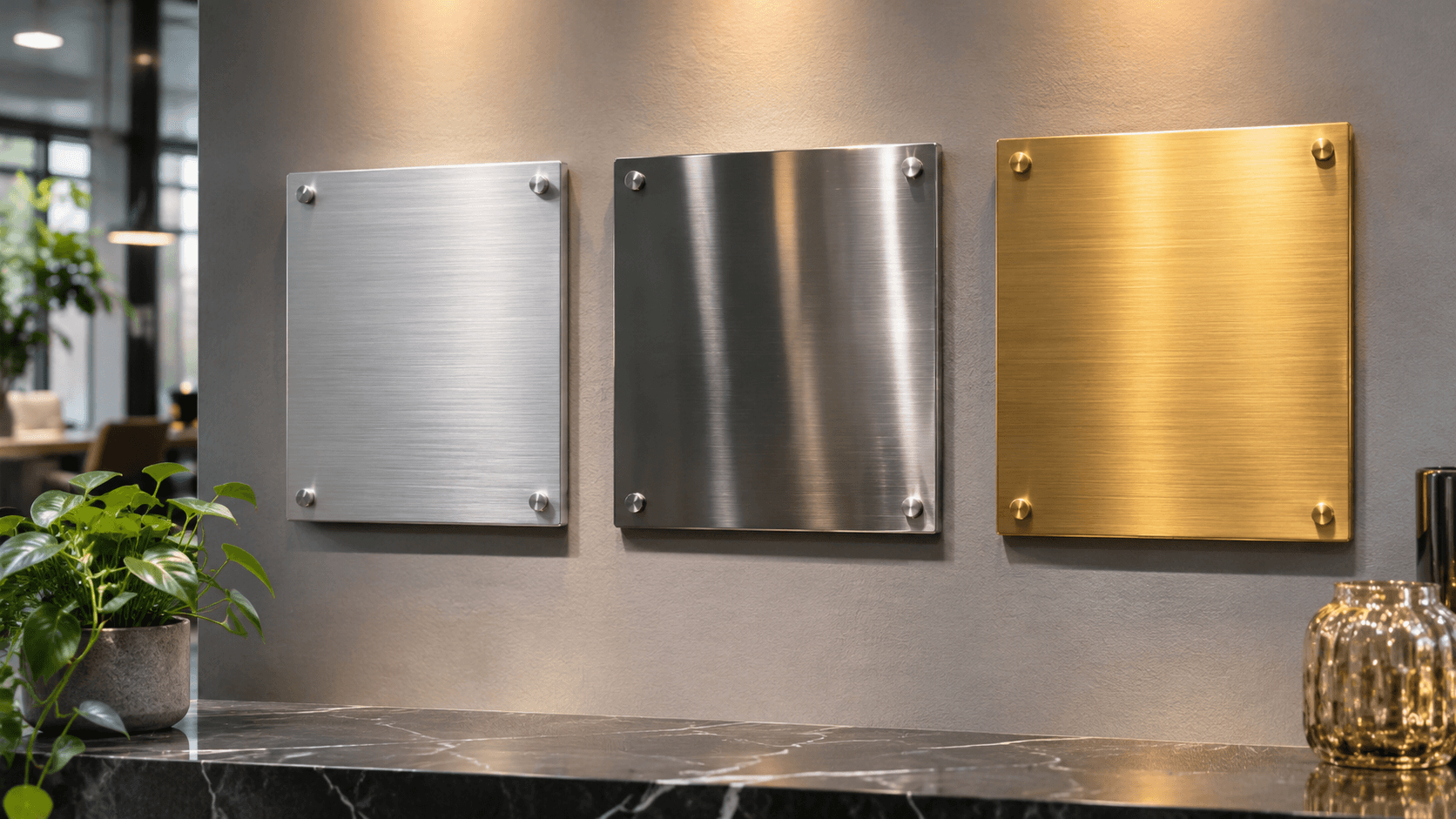
Aluminum, steel, and brass are three popular metal sign materials, each offering distinct advantages in appearance, weight, durability, and maintenance. While aluminum is lightweight and versatile, steel offers strength and a contemporary aesthetic. Brass, meanwhile, is known for its warm, elegant finish.
But which material should you choose for your space? Let's compare their characteristics, applications, and maintenance requirements to help you make an informed decision.
Why Does the Material of Your Metal Sign Matter?
The material you select influences much more than your sign's appearance. It also determines its weight, installation requirements, weather resistance, and long-term maintenance.
For example, a lightweight sign may be preferable for a large indoor wall display, while a weather-resistant material is important for outdoor business signage.
Before exploring individual materials, consider where your sign will be installed, the visual effect you want to achieve, and how much maintenance you're comfortable performing.
Aluminum Signs: Lightweight, Versatile, and Modern
Aluminum is a popular choice for commercial and residential signage because of its lightweight construction, corrosion resistance, and design flexibility.
Unlike ordinary carbon steel, aluminum doesn't develop red rust. Instead, it naturally forms a protective oxide layer that helps resist corrosion.
Advantages of Aluminum Signs
- Lightweight construction: Aluminum is easier to handle and can simplify the installation of larger signs.
- Corrosion resistance: Its natural protective layer makes it suitable for many outdoor applications.
- Versatile finishes: Aluminum can be painted, powder-coated, brushed, or anodized for different appearances.
- Low maintenance: Regular cleaning is generally sufficient to maintain its appearance.
- Contemporary aesthetic: Its clean finish complements modern architecture and minimalist interiors.
However, aluminum is relatively soft compared with steel. Thin aluminum signs may dent or bend when subjected to significant physical impact.
Where Do Aluminum Signs Work Best?
Aluminum is suitable for storefront logos, office signs, house numbers, address plaques, and decorative wall art.
Its lightweight construction makes it particularly convenient for larger displays and installations where minimizing weight is important.
With appropriate finishing and mounting, aluminum can also work well for exterior signage.
Steel Signs: Strong, Durable, and Contemporary
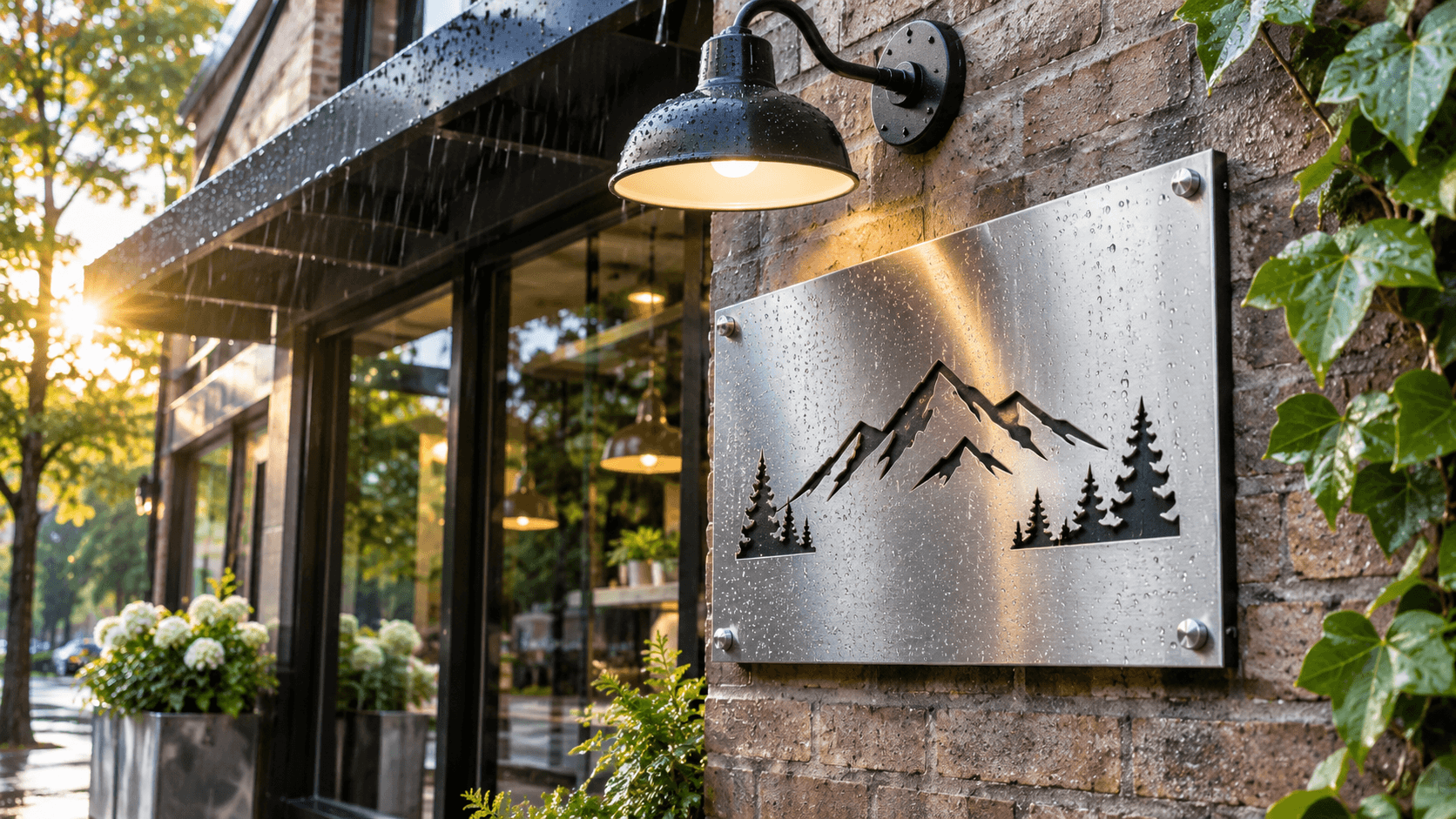
Steel is widely appreciated for its strength, structural rigidity, and distinctive industrial appearance.
However, not all steel signs offer the same corrosion resistance. Carbon steel typically requires protective coatings, while suitable grades of stainless steel provide greater resistance to rust and moisture.
Understanding this distinction is especially important when choosing signs for outdoor installation.
Advantages of Steel Signs
- Excellent strength: Steel offers structural rigidity for demanding installations.
- Industrial appearance: Its metallic finish complements contemporary and industrial-style interiors.
- Design flexibility: Steel can be cut into intricate lettering, geometric shapes, and customized logos.
- Multiple finishing options: Brushed, polished, painted, and powder-coated finishes create different visual effects.
- Long service life: Properly selected, finished, and maintained steel can provide years of reliable use.
Steel is generally heavier than aluminum, so larger signs may require stronger mounting hardware and additional installation planning.
Where Do Steel Signs Work Best?
Steel is an attractive option for corporate logos, gym signage, restaurant branding, office interiors, and architectural displays.
Stainless steel is particularly popular for contemporary commercial environments because of its polished appearance and corrosion resistance.
For outdoor applications, select an appropriate steel grade or protective finish based on local environmental conditions.
Brass Signs: Elegant, Timeless, and Distinctive
Brass is an alloy primarily made from copper and zinc. Its naturally warm, golden appearance makes it a popular choice for sophisticated signage and decorative applications.
Unlike painted metals that imitate gold, brass offers a distinctive metallic finish that can develop a natural patina over time.
Depending on your preferences, this gradual change can enhance its character or be controlled through suitable protective finishes.
Advantages of Brass Signs
- Premium appearance: Its warm golden tones create an elegant, distinctive look.
- Timeless aesthetic: Brass complements traditional, vintage, and luxurious interiors.
- Customization: It can be polished, brushed, engraved, or finished to achieve different effects.
- Decorative versatility: Brass works beautifully for lettering, plaques, address signs, and ornamental designs.
- Natural patina: Uncoated brass develops a characteristic aged appearance with exposure.
However, brass generally requires more attention if you want to preserve its original polished finish.
Where Do Brass Signs Work Best?
Brass is particularly suitable for hotel entrances, boutique storefronts, luxury salons, professional offices, and residential address plaques.
It also works beautifully for decorative interior signs and personalized gifts.
Explore NeonChamp's Custom Metal Signs to create personalized lettering, logos, and decorative displays that complement your space.
|
Feature |
Aluminum |
Steel |
Brass |
|
Weight |
Lightweight |
Generally heavy |
Relatively heavy |
|
Appearance |
Modern & Versatile |
Industrial or contemporary |
Warm and elegant |
|
Corrosion Resistance |
Naturally resistant |
Depends on grade or finish |
Resistant to red rust but develops patina |
|
Maintenance |
Generally low |
Depends on finish and environment |
Regular care for polished finishes |
|
Popular Applications |
Storefronts, addresses, offices |
Gyms, restaurants, business logos |
Hotels, boutiques, decorative plaques |
|
Outdoor Suitability |
Good with suitable finishing |
Requires appropriate grade or protection |
Suitable with appropriate care |
Aluminum vs Steel vs Brass: Quick Comparison
Understanding the differences between these metal sign materials can help you narrow down your options.
Which Metal Should You Choose for Different Spaces?
Your installation location and design preferences should guide your material selection.
For Business Logos and Office Signage
Aluminum works well for lightweight, modern company logos. Stainless steel creates a polished architectural appearance, while brass complements offices seeking a traditional or luxurious aesthetic.
For Restaurants, Salons, and Hotels
Brass adds warmth to boutique hotels and elegant interiors. Steel complements industrial-style restaurants and modern gyms, while aluminum provides versatility for colorful branded displays.
For Home Décor and Address Signs
Aluminum is convenient for lightweight wall decorations and exterior address plaques. Brass creates attractive personalized nameplates, while steel offers a bold appearance for contemporary homes.
For Events and Decorative Displays
Consider aluminum for larger lightweight displays, brass for elegant decorative accents, and steel for installations requiring additional rigidity.
How to Maintain Different Metal Signs
Proper maintenance helps preserve your sign's finish and appearance.
Aluminum generally requires occasional cleaning with mild soap, water, and a soft cloth. Avoid abrasive cleaners that could damage protective coatings.
Steel maintenance depends on its grade and finish. Clean stainless steel with suitable nonabrasive products, and inspect painted carbon steel for scratches that could expose the underlying metal.
Brass may require periodic polishing if you prefer a bright finish. Alternatively, allow uncoated brass to develop its natural patina.
For all three materials, follow the manufacturer's cleaning recommendations and avoid harsh chemicals.
Find Your Ideal Custom Metal Sign at NeonChamp
Choosing between aluminum, steel, and brass ultimately depends on your desired appearance, installation environment, and maintenance preferences.
Aluminum offers lightweight versatility, steel provides strength and a contemporary aesthetic, and brass delivers timeless elegance. Consider your available space, branding requirements, and preferred finish before finalizing your design.
With the right material and thoughtful customization, your metal sign can become a distinctive feature that enhances your home or business for years to come.
How to Compare Metal Sign Quotes Fairly
A material name alone does not establish quality. Ask for the exact alloy or grade, thickness, finish, attachment method, and indoor or outdoor suitability. “Steel” could mean coated carbon steel or corrosion-resistant stainless steel, which perform differently outdoors.
|
Buying priority |
Material to consider first |
Check before ordering |
|
Lightweight, large wall sign |
Aluminum |
Thickness, stiffening, finish and mounting. |
|
High rigidity or industrial look |
Steel |
Carbon vs stainless grade; coating and sign weight. |
|
Warm gold-toned plaque |
Brass |
Solid vs plated construction; polishing and patina preferences. |
|
Coastal exterior sign |
Specified corrosion-resistant material |
Alloy/grade, protective finish and fasteners for salt exposure. |
Common Buying Mistakes to Avoid
Choosing by photo color without confirming whether the material is solid metal, plated, or painted.
Treating all types of steel as equally rust-resistant.
Ignoring weight and wall anchor requirements for larger signs.
Ordering polished brass without planning for patina or routine care.
Assuming an attractive indoor finish is appropriate for an exposed exterior wall.
When exploring Custom Metal Signs, ask which metal types, finishes, and thicknesses are actually offered for your chosen configuration. Not every design or material option is available from every manufacturer.
Frequently Asked Questions About Metal Sign Materials
Is aluminum or stainless steel better for outdoor signs?
Both can work well when correctly specified. Aluminum is lighter; suitable stainless steel grades offer greater rigidity. Exposure, finish, thickness, and fasteners matter as much as the material name.
Will brass signs turn green or darken?
Uncoated brass can develop darker tarnish and patina as it reacts with the environment. A suitable coating or maintenance plan can help preserve a brighter appearance.
Is steel always stronger than aluminum for signage?
Steel is generally stiffer at the same thickness, but overall sign performance also depends on sheet thickness, shape, reinforcement, and support.
What details should I request for an accurate quote?
Flat 50% Off on All ProductsNo Code RequiredView Offers!
Neon Collection50% OFF