we're online
Outdoor Metal Signs: Materials, Durability & Care Guide
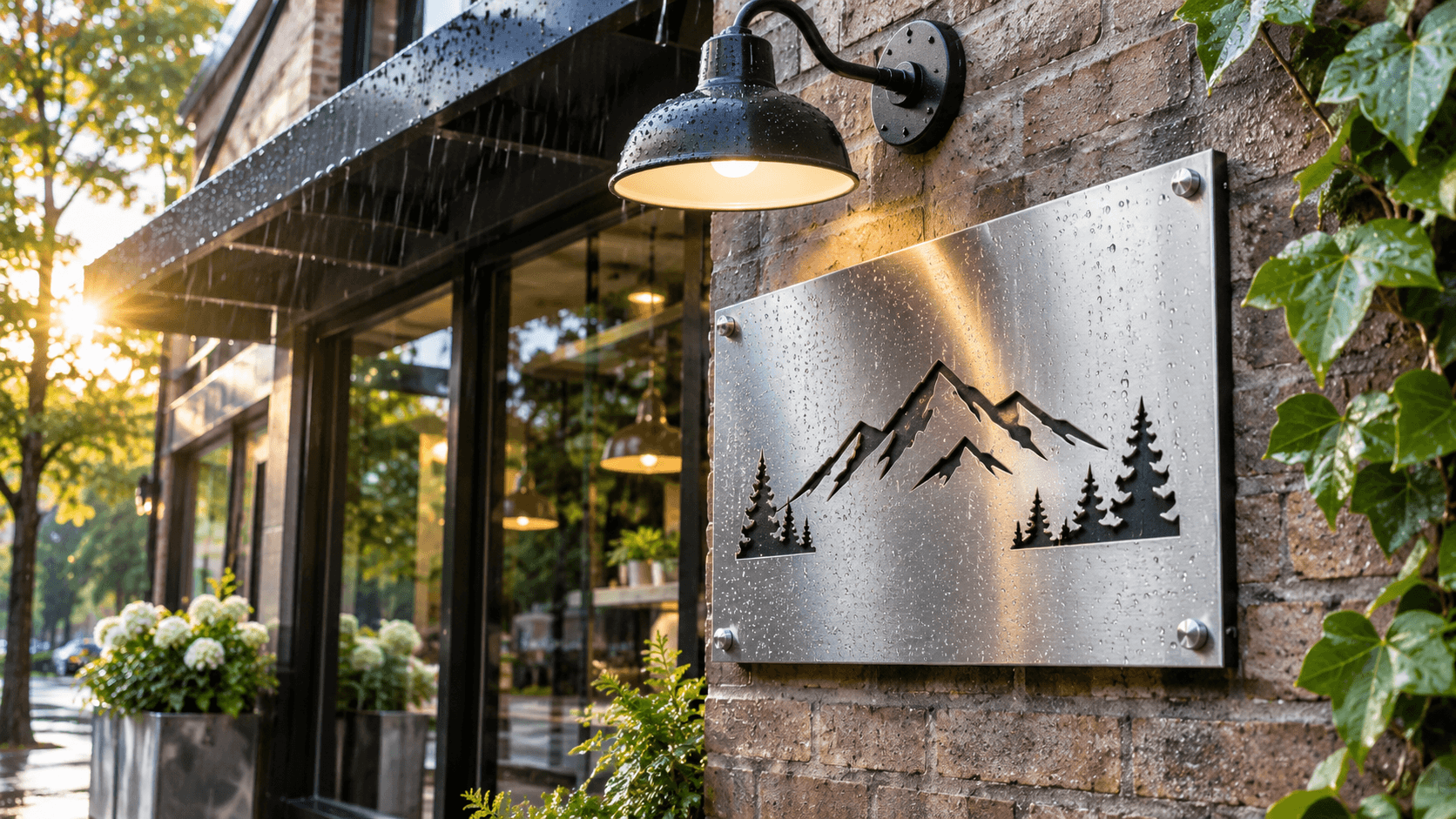
Metal signs are a popular choice for storefronts, business entrances, residential addresses, and outdoor decorative displays. Their durability, versatile designs, and attractive finishes make them suitable for various commercial and residential applications.
But can metal signs withstand rain, intense sunlight, humidity, and changing temperatures?
The answer depends on the material, protective finish, installation location, and maintenance routine. While certain metals naturally resist corrosion, others require additional protection to maintain their appearance outdoors.
Whether you're purchasing a business logo or a personalized address plaque, this guide explains how to choose outdoor metal signs that can withstand the elements while maintaining their visual appeal.
Are Metal Signs Suitable for Outdoor Use?
Yes! Metal signs can be excellent for outdoor applications when manufactured with suitable materials and protective finishes.
Unlike certain indoor decorative materials, properly finished metals can tolerate prolonged exposure to changing environmental conditions. However, not every metal sign is automatically weatherproof.
Its outdoor performance depends on several factors, including:
- The type and grade of metal used.
- The quality of its protective coating or surface treatment.
- Exposure to rain, humidity, sunlight, and airborne salt.
- The installation method and mounting location.
- Regular cleaning and preventive maintenance.
Understanding these factors will help you select signage that complements your property without requiring frequent repairs or replacement.
Which Metal Materials Work Best Outdoors?
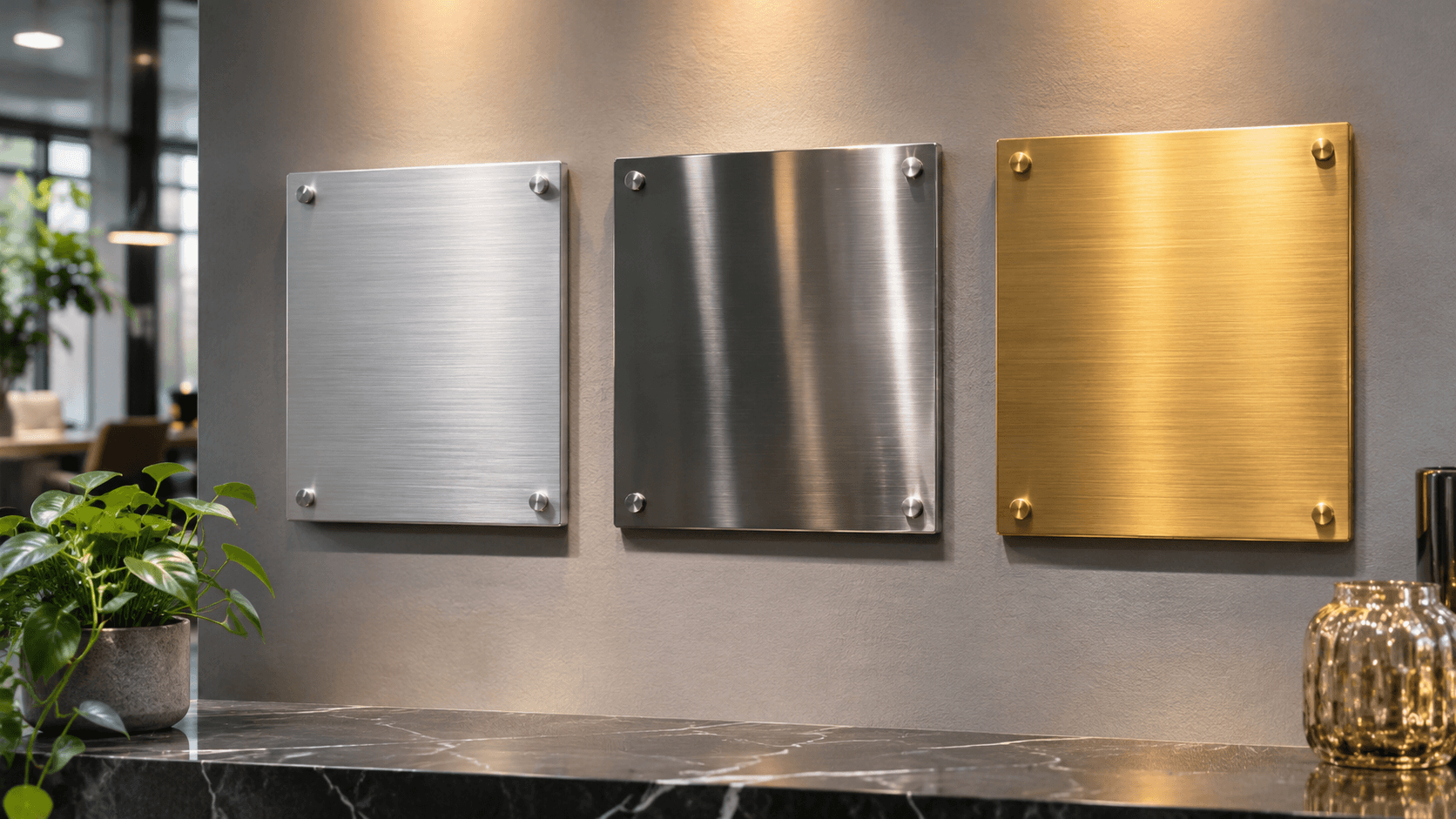
Different metals respond differently to environmental exposure. Aluminum, steel, and brass are popular choices, but each has specific characteristics worth considering.
Aluminum: Lightweight and Naturally Corrosion-Resistant
Aluminum is an excellent option for many exterior signage applications because it naturally develops a protective oxide layer.
Unlike ordinary carbon steel, aluminum doesn't produce red rust. Its lightweight construction also makes it convenient for larger signs and installations where minimizing weight is important.
Powder-coated or anodized aluminum offers additional finishing options and surface protection.
Aluminum works particularly well for storefront lettering, house numbers, address plaques, and outdoor business logos.
However, prolonged exposure to coastal environments or harsh chemicals can still cause corrosion, especially if the protective finish becomes damaged.
Steel: Strong and Versatile
Steel provides excellent structural strength and a contemporary appearance. However, its outdoor suitability depends heavily on the type of steel and its protective finish.
Ordinary carbon steel can rust when exposed to moisture and oxygen. Painting, galvanizing, or powder coating can help protect it from environmental damage.
Stainless steel offers greater corrosion resistance, making it a popular choice for exterior architectural signage.
For coastal installations, selecting an appropriate stainless steel grade is particularly important because salt exposure can accelerate corrosion.
Brass: Elegant with a Natural Patina
Brass offers a distinctive golden appearance that complements elegant storefronts, traditional buildings, and decorative address signs.
Unlike carbon steel, brass doesn't develop red rust. However, exposure to air and moisture gradually changes its surface appearance, producing a natural patina.
Some property owners appreciate this aged finish, while others prefer maintaining its original polished appearance.
Suitable protective coatings and regular maintenance can help preserve the desired finish.
How Do Weather Conditions Affect Metal Signs?
Even durable outdoor signage can deteriorate when exposed to challenging environmental conditions. Understanding the potential risks helps you choose suitable materials and installation locations.
Rain and Humidity
Frequent rainfall and high humidity increase the risk of corrosion, particularly when moisture accumulates around mounting hardware, joints, or damaged protective coatings.
Choose corrosion-resistant materials and ensure that your sign's design doesn't trap water.
Sunlight and UV Exposure
Although sunlight doesn't cause metal to rust, prolonged UV exposure can affect certain paints, coatings, and decorative finishes.
For signs installed in direct sunlight, choose exterior-grade finishes designed to resist fading and discoloration.
Coastal Conditions
Salt-laden air creates additional challenges for exterior signage. Salt deposits can accelerate corrosion, even on certain grades of stainless steel.
If your property is located near the ocean, prioritize materials and finishes specifically suited to marine or coastal environments.
Frequent cleaning can also help remove accumulated salt deposits.
Temperature Fluctuations
Metals expand and contract as temperatures change. Poorly designed mounting arrangements may experience additional stress during significant temperature fluctuations.
Use appropriate mounting hardware and follow the manufacturer's installation recommendations.
Which Protective Finishes Are Best for Outdoor Metal Signs?
Choosing the right finish is just as important as selecting the material itself.
|
Finish |
Key Benefits |
Suitable Applications |
|
Powder Coating |
Provides a durable, decorative protective layer |
Aluminum and steel business signs |
|
Anodizing |
Enhances aluminum's protective oxide layer |
Aluminum address and storefront signs |
|
Galvanizing |
Adds zinc protection against steel corrosion |
Exterior carbon steel signage |
|
Exterior-Grade Paint |
Offers color customization and surface protection |
Commercial and residential signs |
|
Clear Protective Coating |
Helps preserve the original metallic appearance |
Decorative brass and metal signs |
Remember that protective finishes can become scratched or damaged over time. Periodic inspections help identify areas requiring attention before corrosion develops.
What Should You Check Before Installing an Outdoor Metal Sign?
Even the most durable materials require appropriate installation. Before mounting your sign, consider these essential factors.
Choose a Suitable Mounting Location
Evaluate how much exposure your sign will receive throughout the year.
Installing signage beneath an awning or covered entrance can reduce direct exposure to rainfall and intense sunlight.
For completely exposed locations, prioritize weather-resistant materials and protective finishes.
Select Appropriate Mounting Hardware
Use corrosion-resistant mounting hardware suitable for your sign's material and installation surface.
Improper hardware can cause staining, corrosion, or structural problems. Pay particular attention to installations involving different metals, as direct contact in wet conditions can contribute to galvanic corrosion.
Check Local Installation Requirements
Commercial signage may be subject to local zoning regulations, building codes, and permit requirements.
Before installation, confirm any applicable restrictions concerning sign dimensions, placement, and mounting methods.
For large or elevated installations, consider professional assistance.
How to Clean and Maintain Outdoor Metal Signs
Regular maintenance helps preserve your sign's appearance and extends the life of its protective finish.
Follow these simple maintenance practices:
- Clean regularly: Use mild soap, water, and a soft cloth to remove dirt, dust, and environmental deposits.
- Avoid abrasive cleaners: Harsh chemicals and abrasive cleaning tools can damage protective coatings and polished surfaces.
- Inspect protective finishes: Check for scratches, peeling paint, or exposed metal that could encourage corrosion.
- Check mounting hardware: Inspect screws, brackets, and other fittings periodically for looseness or deterioration.
- Address damage promptly: Repair damaged coatings and investigate early signs of corrosion before they spread.
Properties in coastal or heavily polluted areas may require more frequent cleaning and inspections.
Choose Durable Custom Metal Signs from NeonChamp
The right metal sign can enhance your property's appearance while providing reliable outdoor performance. Aluminum offers lightweight versatility, appropriately protected steel provides strength, and brass delivers timeless decorative appeal.
Before ordering, consider your local climate, preferred finish, installation location, and maintenance requirements.
Explore NeonChamp's Custom Metal Signs to create personalized business logos, address signs, and decorative displays that complement your outdoor space.
Outdoor Metal Sign Buying Checklist
Before buying, match the sign to the exposure level rather than relying on the phrase “weatherproof.” A sheltered porch and an oceanfront building create different demands for coatings, materials, and fasteners.
|
Site condition |
Recommended buying check |
Potential concern |
|
Rain-exposed storefront |
Exterior finish, drainage and mounting details |
Water collecting at joints or behind letters. |
|
Coastal or salted-road location |
Metal grade and compatible corrosion-resistant hardware |
Salt-driven corrosion and surface staining. |
|
Full sun exposure |
UV-resistant color coating and warranty terms |
Fading and finish deterioration. |
|
Large or elevated sign |
Wind-load and structural mounting review |
Loose fixings or unsafe installations. |
Questions to Ask the Seller Before You Order
What is the exact metal alloy or grade, and how thick is it?
Is the finish recommended for my climate and level of weather exposure?
Which mounting fasteners are supplied, and are they compatible with the sign metal?
What cleaning products and inspection schedule are recommended?
Are there exclusions in the warranty for coastal exposure, discoloration, or coating damage?
When comparing Custom Metal Signs, confirm the selected product configuration is intended for the exact outdoor location. Exterior suitability should be verified before purchase rather than assumed from product photos.
Frequently Asked Questions About Outdoor Metal Signs
Do metal signs rust outdoors?
Some do. Unprotected carbon steel can develop red rust, while aluminum forms an oxide layer and brass can develop patina. Stainless steel corrosion resistance varies by grade and conditions.
What metal sign is best near the ocean?
There is no single choice for every coastal site. Ask about suitable marine-exposure grades, finishes, and compatible fasteners, and plan for regular salt removal.
Does powder coating make any sign waterproof?
No. A coating can improve protection, but its effectiveness depends on surface preparation, coverage, damage, and exposure. Edges, holes, and hardware still need attention.
How often should I clean an outdoor sign?
Follow the maker’s instructions and adjust for pollution, sea spray, and visible buildup. Check mounting hardware and finish condition during routine cleaning.
Flat 50% Off on All ProductsNo Code RequiredView Offers!
Neon Collection50% OFF