we're online

Backlit Business Signs: Size & Placement Guide
A beautifully designed business sign can lose its impact if it's too small, installed too high, or positioned against an unsuitable background. Whether you're opening a new storefront or upgrading your office reception, choosing the right dimensions and installation location is just as important as the sign's design.
Backlit business signs offer an attractive combination of dimensional lettering and soft illumination. However, their effectiveness depends on several factors, including viewing distance, wall dimensions, surrounding lighting, and logo proportions.
This guide will help you determine the ideal size and placement for your illuminated business sign while avoiding common installation mistakes.
Why Do Sign Size and Placement Matter?
Your business sign should be easy to recognize, visually balanced, and appropriately sized for its surroundings.
An oversized sign can overwhelm a compact reception area, while small lettering may become difficult to read on a large storefront. Similarly, a poorly positioned sign might remain unnoticed despite its attractive illumination.
Proper sizing and placement help you achieve three essential objectives:
- Improve brand visibility from the intended viewing distance.
- Maintain balanced proportions between your sign and its mounting surface.
- Create a professional appearance that complements your business environment.
Planning these details before ordering can also help you avoid unnecessary installation complications.
How to Choose the Right Size for Your Backlit Business Sign
There is no universal size that works for every business. The ideal dimensions depend on your logo, available space, installation location, and intended audience.
1. Determine the Viewing Distance
Start by identifying where customers will typically stand when viewing your sign.
A reception-wall logo designed for visitors standing a few feet away doesn't need the same dimensions as storefront lettering intended to attract pedestrians across the street.
For signs viewed from greater distances, prioritize larger lettering, clear spacing, and recognizable shapes.
Consider whether your audience will be walking, driving, or standing still. Signs intended for passing motorists generally require greater visibility than those installed inside offices.
2. Measure Your Available Wall Space
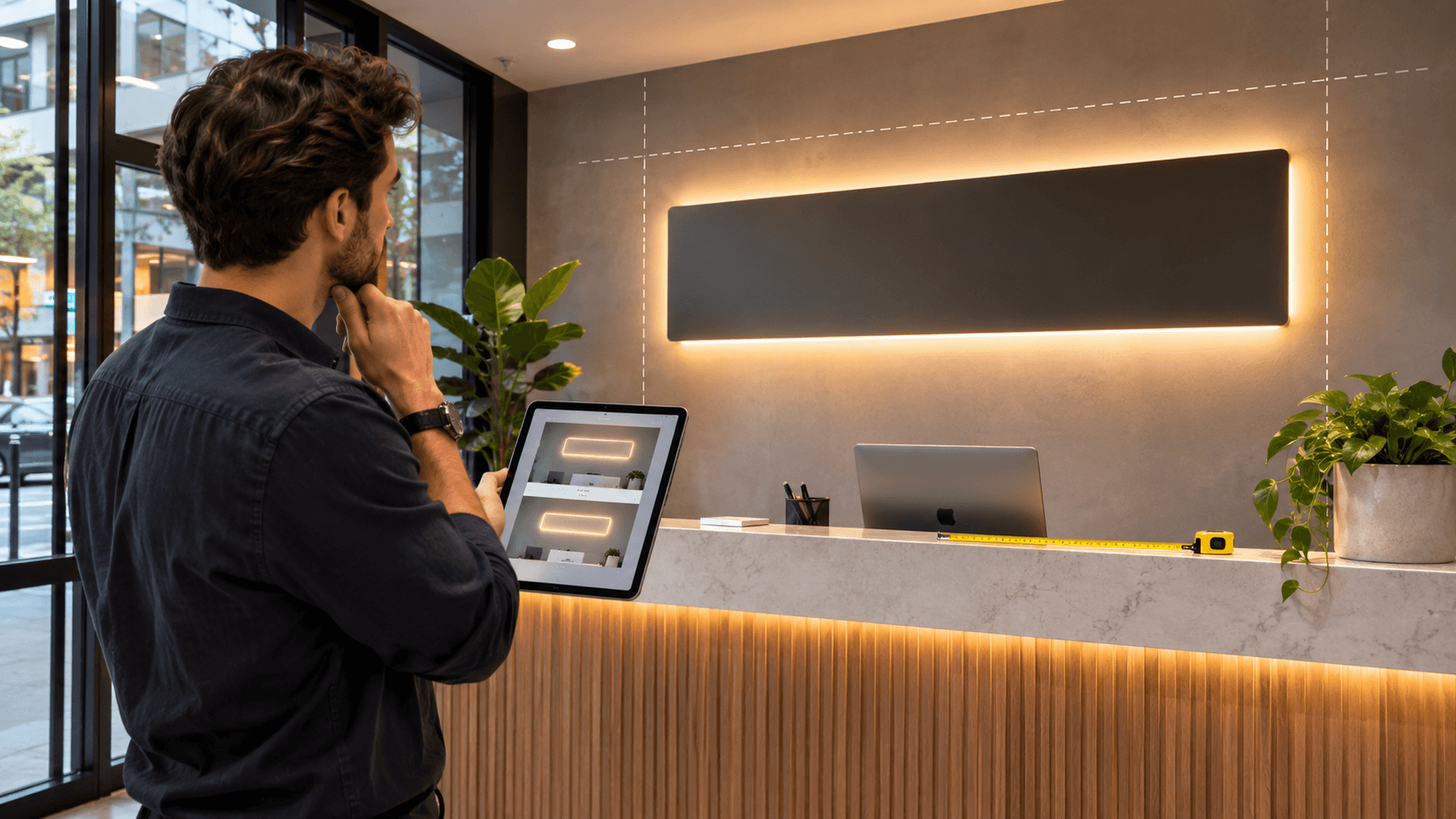
Measure the width and height of your intended installation area before finalizing your design.
Account for architectural elements such as doors, windows, ceiling fixtures, decorative panels, and nearby signage.
Avoid filling the entire available surface with lettering. Leaving sufficient space around your logo creates visual balance and allows the backlighting to spread effectively.
For interior installations, consider how the sign will appear alongside reception desks, furniture, and other decorative elements.
3. Maintain Your Logo's Original Proportions
Your business logo may contain lettering, symbols, decorative elements, or a combination of all three.
When resizing your design, preserve its original proportions rather than stretching it to fill the available space.
Pay particular attention to smaller lettering and intricate details. Elements that look attractive on a computer screen may become difficult to reproduce or recognize at certain physical dimensions.
If your logo contains a tagline, consider whether it will remain readable from the intended viewing distance.
Where Should You Install Backlit Business Signs?
Choosing the right location involves more than finding an empty wall. Consider customer movement, surrounding architecture, and how people interact with your space.
Storefronts and Building Entrances
Storefront signage should be positioned where approaching customers can easily identify your business.
Evaluate visibility from sidewalks, parking areas, and nearby streets. Check whether trees, awnings, architectural features, or neighboring signs could obstruct the view.
For exterior installations, confirm that your chosen location provides sufficient space for secure mounting and suitable electrical connections.
Reception Areas and Office Lobbies
Reception walls are popular locations for illuminated company logos because they create an immediate visual impression.
Position your sign where visitors naturally look when entering the space, such as behind the reception desk or on a prominent entrance-facing wall.
Keep the dimensions proportionate to the wall and surrounding furniture. The goal is to establish a clear focal point without overwhelming the interior.
Restaurants, Salons, and Retail Interiors
Restaurants can position illuminated logos behind service counters or near entrance areas. Salons may prefer feature walls visible from their waiting areas, while retail stores can incorporate backlit lettering into branded displays.
Choose locations that complement your interior design without competing with essential directional signage.
How High Should You Mount Your Backlit Sign?
Mounting height affects both visibility and the overall appearance of your sign.
For interior installations, position the lettering at a comfortable viewing height relative to the room's layout. A logo behind a reception desk should remain visible above furniture and computer monitors.
For storefronts, consider the building's architecture, pedestrian sightlines, and nearby obstructions. Higher placement may improve visibility from a distance, but excessive height can make smaller lettering difficult to recognize.
Before installation, mark the proposed dimensions on your wall using removable tape or a paper template. Step back to evaluate the position from different viewing angles.
How Does Surrounding Lighting Affect Sign Placement?
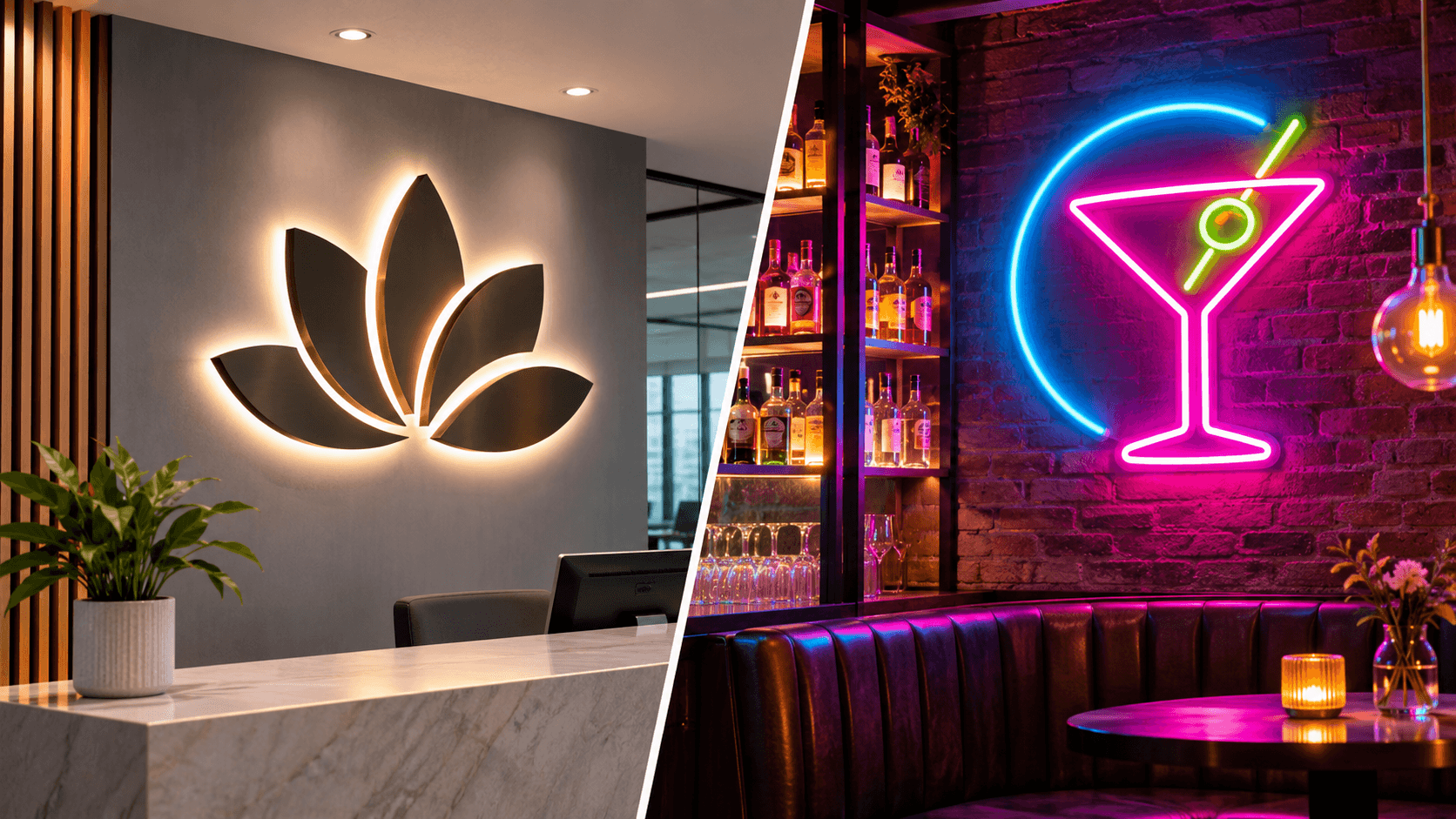
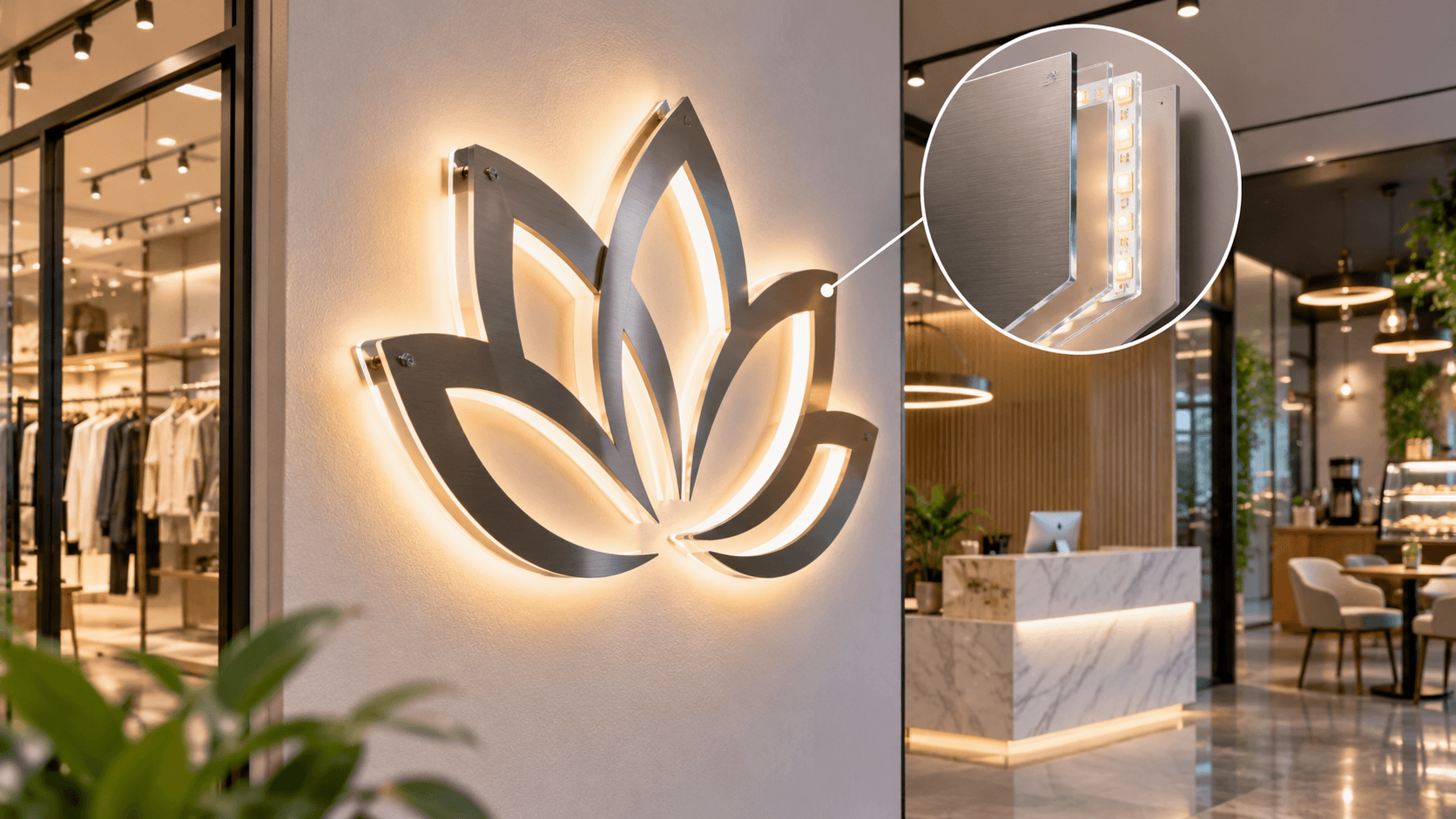
Backlit signage creates a halo effect by directing LED illumination toward the mounting surface. The appearance of this glow depends partly on the surrounding environment.
Consider these factors before choosing your installation location:
- Natural light: Strong daylight can make subtle halo illumination less noticeable.
- Wall color: Light-colored surfaces generally reflect illumination more effectively than dark walls.
- Wall texture: Rough or uneven surfaces may produce an irregular halo effect.
- Ambient lighting: Nearby spotlights and bright ceiling fixtures can influence the sign's appearance.
- Background contrast: Choose lettering finishes that remain recognizable even when the illumination is switched off.
Evaluate your proposed location during both daytime and evening hours whenever possible.
What Should You Check Before Installation?
Once you've finalized the dimensions and placement, review the practical requirements of your installation.
Electrical Access
Identify a suitable power source near the proposed mounting location. Plan how electrical wiring will be routed and concealed without compromising the appearance of your sign.
Wall Construction
Different mounting surfaces require different hardware. Drywall, concrete, brick, and decorative wall panels may have different installation requirements.
Confirm that your wall can support the sign's weight and mounting arrangement.
Indoor vs. Outdoor Conditions
Exterior signage requires appropriate protection against rain, moisture, temperature fluctuations, and other environmental conditions.
Verify that your selected sign and electrical components are suitable for outdoor installation. Check applicable building regulations and local signage requirements before proceeding.
Design Your Custom Backlit Sign with NeonChamp
The ideal illuminated sign combines attractive design with practical dimensions and thoughtful placement. By considering viewing distance, logo proportions, mounting height, and surrounding lighting, you can create signage that enhances your business environment.
Explore NeonChamp's Custom LED Backlit Signs to design a personalized display that complements your branding and fits your intended installation space.
A Practical Backlit Sign Sizing Worksheet
Use the table below as a planning checklist, not a universal size formula. Final letter dimensions depend on font, contrast, available wall area, viewing angle, local rules, and the sign maker’s construction limits.
|
Measure or check |
What to record |
Why it matters |
|
Usual viewing point |
Distance and viewing angle |
Helps judge letter readability and logo detail. |
|
Usable wall space |
Width, height, obstructions |
Prevents oversized layouts or blocked lettering. |
|
Smallest text |
Letter height and strokes |
Small taglines are often unreadable at a distance. |
|
Wall finish |
Color, texture, reflectivity |
Affects halo brightness and distribution. |
|
Power and mounting |
Cable route, wall type, access |
May change the feasible sign size or placement. |
Try a Full-Scale Placement Test Before Ordering
Print the logo outline at scale or tape a rectangle matching its proposed width and height.
Stand at the entryway, reception queue, sidewalk, or other real viewing positions.
Check whether the brand name remains readable and whether doors, plants, and fixtures block it.
Repeat the check during the day and after dark, considering that halo light looks different in bright surroundings.
Photograph the mockup and send it to the sign supplier with wall measurements and your logo file.
If your project includes several storefront or interior signs, compare LED Signs for Business to keep the visual identity consistent across placements.
Frequently Asked Questions About Backlit Sign Size and Placement
Is there one ideal sign size for every storefront?
No. The appropriate size depends on the viewing distance, sign copy, facade proportions, local sign rules, and installation method.
Should a backlit sign be mounted at eye level?
Not necessarily. Reception logos often sit above furniture, and storefront signs may need higher mounting. Test sightlines rather than using a fixed height.
Can very small letters be backlit?
Small letter strokes and tight gaps can make lighting and fabrication difficult. Request the supplier’s minimum letter dimensions and a proof at the chosen scale.
Do I need permission to install a business sign?
Potentially. Check property-owner requirements, local sign permits, and electrical rules before production or installation.
Flat 50% Off on All ProductsNo Code RequiredView Offers!
Neon Collection50% OFF