we're online

Backlit Signs vs Neon Signs: What’s the Difference and Where Does Each Work Best
Choosing the right illuminated sign can completely transform how customers perceive your business. Whether you're designing a storefront, upgrading your reception area, or decorating a restaurant, two popular options worth considering are backlit signs and neon signs.
Both offer attractive illumination, customizable designs, and excellent branding opportunities. However, they create noticeably different visual effects and serve different design purposes.
Understanding the differences between backlit signs vs neon signs will help you choose an option that complements your brand, installation space, and overall aesthetic.
What Are Backlit Signs?
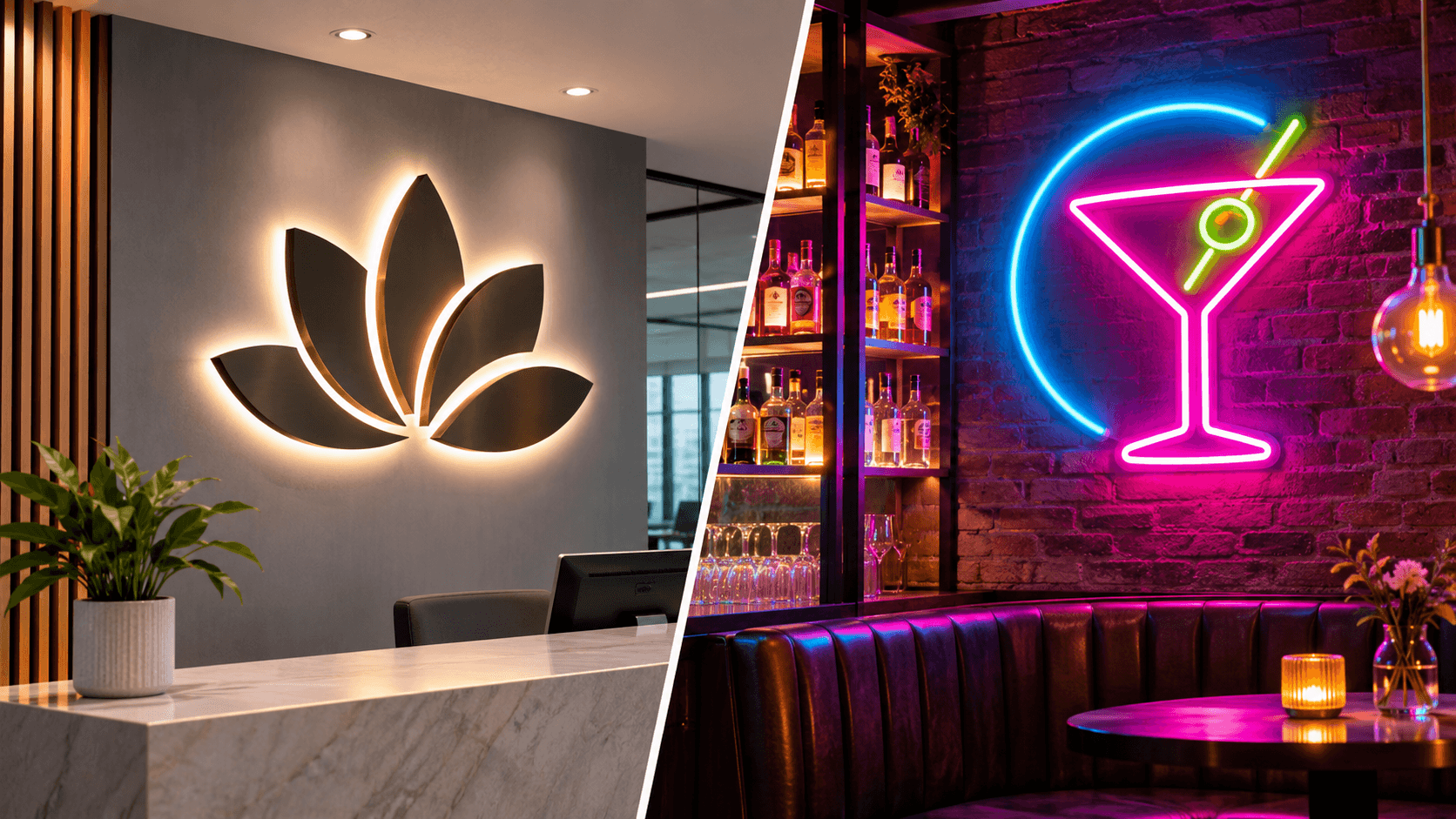
Backlit signs feature dimensional letters or logos with LED lights positioned behind them. The light spreads across the mounting surface, creating a soft glow around the lettering. This effect, commonly called halo lighting, gives the sign a sophisticated, floating appearance.
The front of each letter generally remains solid and opaque, allowing its color and finish to stand out against the illuminated background.
Businesses frequently use Custom LED Backlit Signs for storefront lettering, reception-wall logos, corporate offices, and other locations where professional branding is essential.
What Are Neon Signs?
Neon signs use illuminated tubing to create glowing letters, shapes, logos, and decorative designs.
Traditional neon signs rely on gas-filled glass tubes. Modern LED neon signs, however, use flexible LED lighting enclosed in a diffusing material to recreate the continuous glow associated with traditional neon.
LED neon offers considerable design flexibility, making it suitable for everything from business logos to decorative quotes and intricate wall art.
NeonChamp's Custom Neon Signs allow businesses and individuals to turn creative ideas into personalized illuminated displays.
Backlit Signs vs Neon Signs: 7 Key Differences
Although both signage options use illumination to attract attention, their appearance, construction, and applications differ significantly.
1. Lighting Style and Visual Effect
The most noticeable difference is how each sign produces its glow.
Backlit signage directs illumination toward the mounting surface, creating a halo around dimensional letters. The resulting effect is generally subtle, refined, and architectural.
LED neon signs produce light along the visible tubing itself. This creates bright, continuous outlines that emphasize the shape of the lettering or artwork.
If your design requires dimensional lettering with understated illumination, backlighting offers that appearance. Neon works particularly well when the glowing design itself is intended to become the focal point.
2. Logo Reproduction and Design Flexibility
Backlit signs are particularly suitable for dimensional business logos, individual letters, and designs featuring solid surfaces.
Their construction allows the visible face of a logo to retain its original finish while illumination highlights its outline.
LED neon signs are excellent for designs featuring continuous lines, handwritten lettering, decorative shapes, and stylized illustrations.
However, extremely intricate logos may require simplification depending on the tubing dimensions and manufacturing limitations.
3. Daytime Appearance
Backlit signs retain their dimensional appearance even when their illumination is switched off. Their solid lettering, material finish, and physical depth continue to contribute to the overall design.
LED neon signs generally appear less luminous when switched off, although their colored tubing and mounting arrangement remain visible.
For businesses operating primarily during daylight hours, consider how the sign will complement the surrounding architecture without illumination.
4. Business Branding vs Decorative Applications
Backlit signage is commonly associated with permanent architectural branding. It works particularly well on building façades, reception walls, and other prominent commercial surfaces.
Neon signage is equally suitable for business branding but offers additional opportunities for decorative applications.
For example, a restaurant might install a dimensional backlit logo near its entrance while displaying colorful Neon Signs featuring creative phrases inside its dining area.
Neither option is limited to a particular industry. Your choice depends primarily on the visual identity you want to establish.
5. Installation Requirements
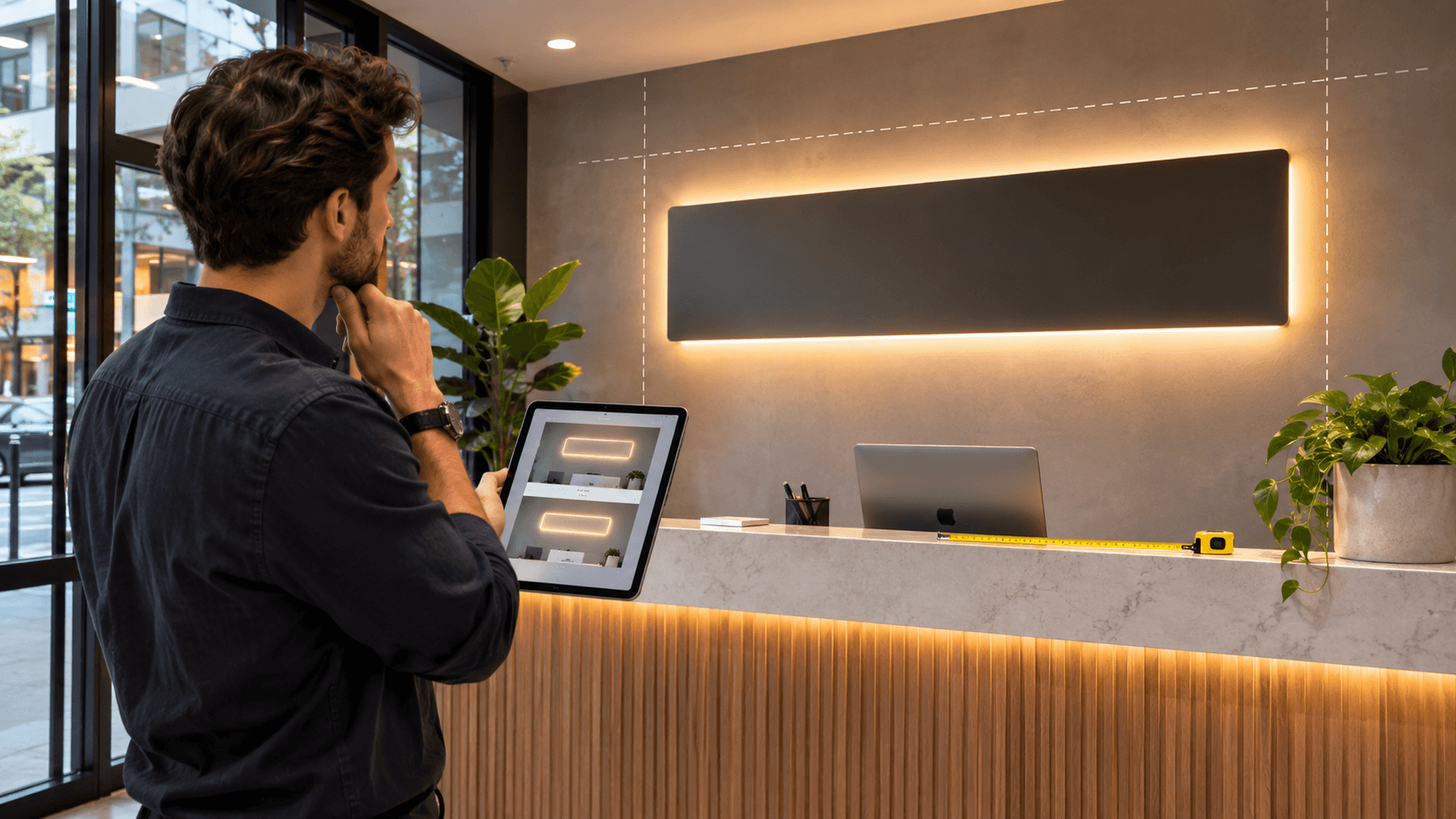
Backlit lettering generally requires careful positioning to maintain an even halo effect. The distance between the letters and the mounting surface influences how the light spreads.
Installation may involve individual mounting studs, electrical connections, and concealed wiring.
LED neon signs are often supplied as assembled displays mounted on backing panels, although construction varies by design.
Both options require suitable electrical access and secure mounting. Larger commercial installations may benefit from professional assistance.
6. Indoor and Outdoor Placement
Both signage types can be suitable for indoor or outdoor applications when manufactured with the appropriate components.
Backlit lettering is frequently installed on storefronts, building entrances, and interior feature walls. Outdoor installations require weather-resistant construction and suitable electrical protection.
LED neon signs are popular for indoor decorative displays, although outdoor-rated versions can also be installed in exterior locations.
Always verify the product's outdoor suitability before exposing it to rain, humidity, or extreme temperatures.
7. Maintenance and Cleaning
Both options benefit from regular cleaning and occasional electrical inspections.
Backlit lettering may require cleaning around individual letters and mounting hardware. Exterior installations should also be inspected for moisture intrusion and loose fittings.
LED neon signs generally have smooth illuminated surfaces that are relatively straightforward to clean.
Regardless of the signage type, follow the manufacturer's maintenance instructions and disconnect the power before performing any permitted cleaning.
Backlit Signs vs Neon Signs: Quick Comparison
|
Feature |
Backlit Signs |
LED Neon Signs |
|
Illumination |
Halo glow behind lettering |
Continuous glowing outlines |
|
Appearance |
Dimensional and architectural |
Vibrant and decorative |
|
Logo style |
Solid lettering and dimensional logos |
Outlined logos and creative designs |
|
Daytime look |
Visible material finish and depth |
Visible tubing and backing |
|
Popular locations |
Storefronts and reception walls |
Retail interiors and decorative walls |
|
Installation |
Often individually mounted letters |
Often assembled on backing panels |
Where Does Each Sign Work Best?
Your installation location can help narrow down the choice between backlit signs vs neon signs.
Corporate Offices and Reception Areas
Backlit lettering creates a polished appearance that complements professional interiors. Its dimensional construction works particularly well for permanent company logos.
Restaurants, Cafés, and Bars
Both options work beautifully. Backlit logos can establish your brand at the entrance, while colorful neon displays add personality to dining areas and photo-friendly corners.
Retail Stores and Storefronts
Dimensional backlit lettering can complement contemporary storefront architecture. LED neon is suitable for eye-catching window displays, promotional messaging, and creative interior branding.
Salons, Gyms, and Studios
Backlit logos can establish a consistent brand identity in reception areas. Neon displays are ideal for motivational quotes, decorative accents, and social-media-friendly feature walls.
How to Choose the Right Sign for Your Business
Before finalizing your signage, consider your brand personality, available wall space, viewing distance, and surrounding lighting.
For a minimalist corporate identity, dimensional backlighting may complement your existing décor. If your brand emphasizes vibrant colors, creative typography, or playful messaging, LED neon provides additional decorative possibilities.
You should also consider installation requirements, electrical access, and whether your sign will be exposed to outdoor conditions.
Explore Custom Illuminated Signs at NeonChamp
The right signage should reflect your brand while complementing its surroundings. Whether you prefer the architectural appeal of halo lighting or the vibrant glow of neon, both options offer distinctive ways to showcase your business.
Explore NeonChamp's customizable illuminated signage solutions to create a display that brings your branding to life.
Which Sign Should You Buy? Match the Design to the Job
|
Your priority |
Better starting point |
Reason |
|
Dimensional company lettering |
Backlit sign |
Solid faces and halo lighting suit permanent architectural branding. |
|
Bright quote or line-art graphic |
LED neon sign |
Illuminated outlines make decorative text and shapes stand out. |
|
Artwork with acrylic detail |
Neon-acrylic artwork |
Combines printed or designed acrylic surfaces with illuminated elements. |
|
Maximum visibility across a bright street |
Test both options |
Letter size, contrast, viewing angle, and daylight appearance can outweigh sign type. |
For artistic display pieces rather than standard lettering, Neon Sign Artwork may fit the design better than a conventional halo-lit logo.
Compare the Full Cost, Not Just the Sign Price
Request quotes for the same overall dimensions and installation conditions. Check whether each quote includes custom artwork preparation, backing or individual letters, power supply, mounting accessories, shipping, taxes, and installation. A lower sign-only price may not be the lower installed cost.
Before ordering, compare:
Proof approval and any charges for artwork revisions.
Power requirements and how wiring will be hidden.
Expected daytime appearance as well as night illumination.
Indoor or outdoor suitability and servicing options.
Actual delivery and installation arrangements.
Frequently Asked Questions: Backlit vs Neon Signs
Which is better for a professional office logo?
Halo-lit lettering is a good starting point for a restrained dimensional logo. LED neon can also work if its glowing outline matches your brand style.
Which is easier to move to a new location?
A preassembled LED neon sign may be simpler to relocate than individually mounted backlit letters, but that depends on the size, backing, wiring, and wall anchors.
Are LED neon signs and traditional glass neon signs identical?
No. Traditional neon uses gas-filled glass tubing; LED neon-style signs use LED light sources and diffusers. Ask the seller which technology is being offered.
Can either option work outside?
Yes, if the specific model and its electrical components are rated and installed for the outdoor conditions. Do not assume every illuminated sign is weatherproof.
Flat 50% Off on All ProductsNo Code RequiredView Offers!
Neon Collection50% OFF