
 we're online
What Makes an LED Neon Sign Safe?
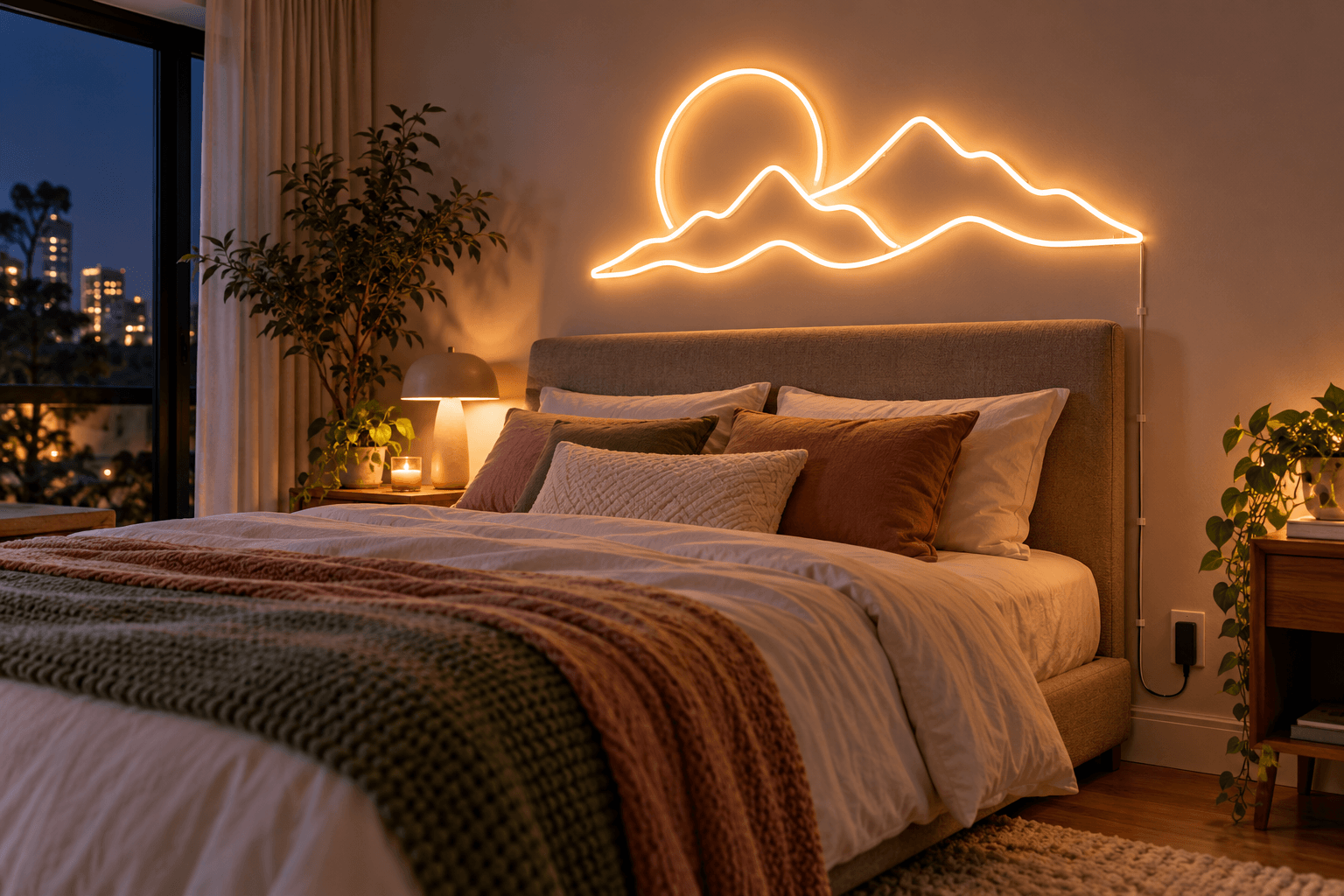
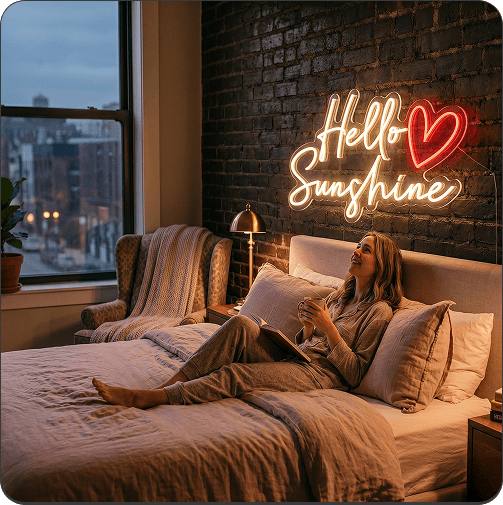
Yes - a well-made LED neon sign can be a practical choice for bedrooms and other indoor spaces when it uses the correct power supply, is mounted securely, and is used according to the manufacturer's instructions.
LED neon typically operates at low voltage after power conversion and produces less surface heat than traditional glass neon. The buying decision should still include the adapter, wiring, mounting method, indoor rating, and seller support - not just the glowing tube.
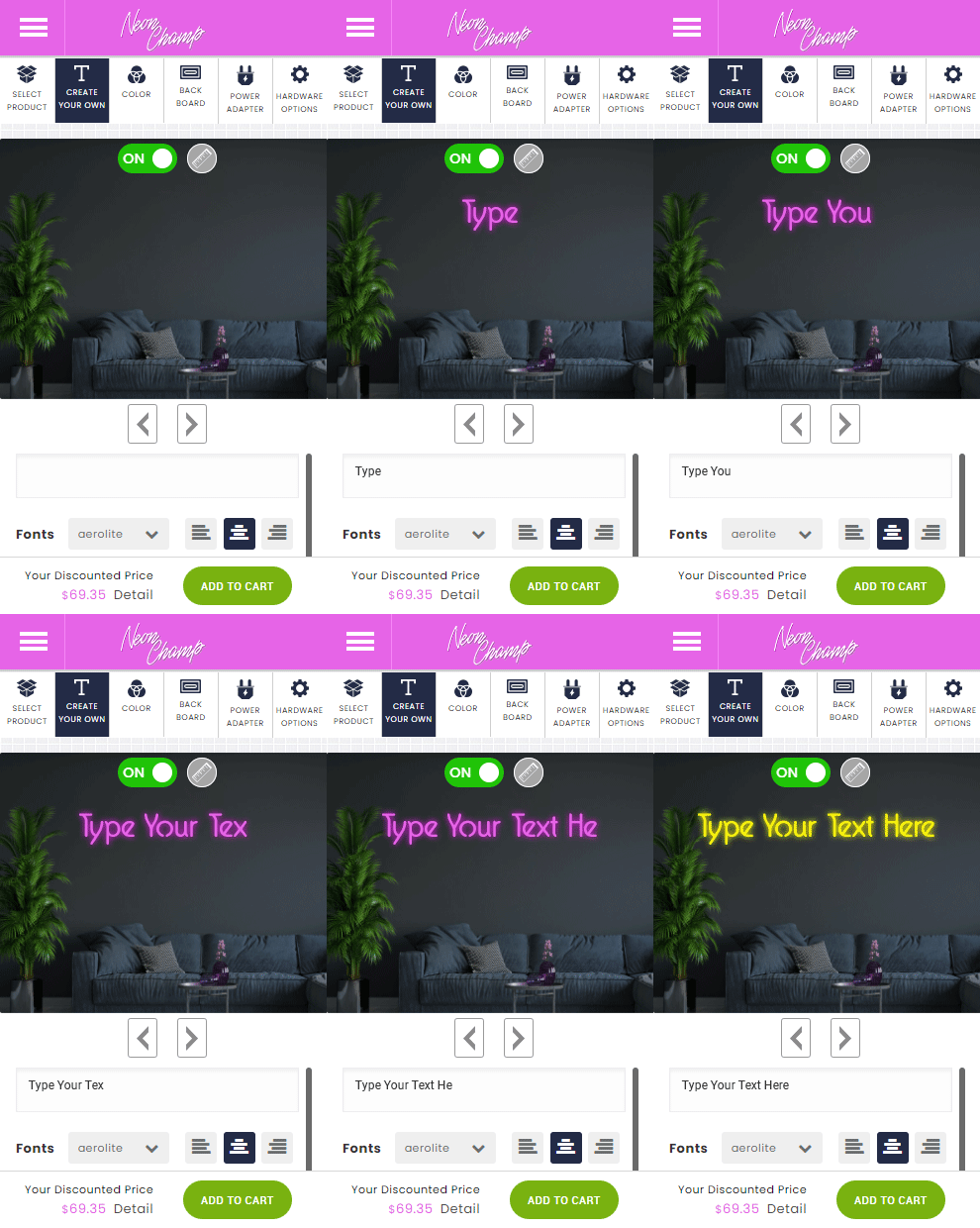
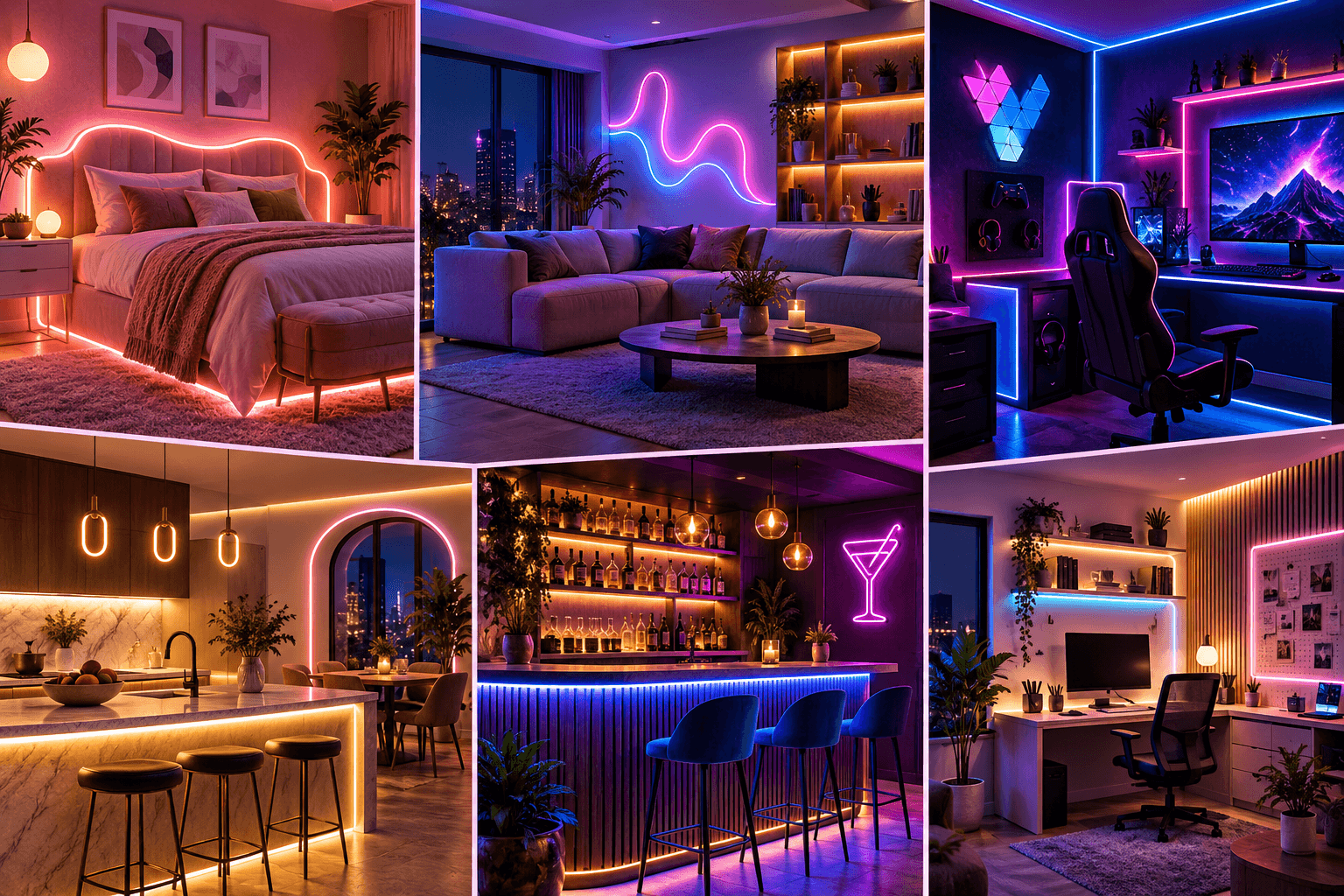
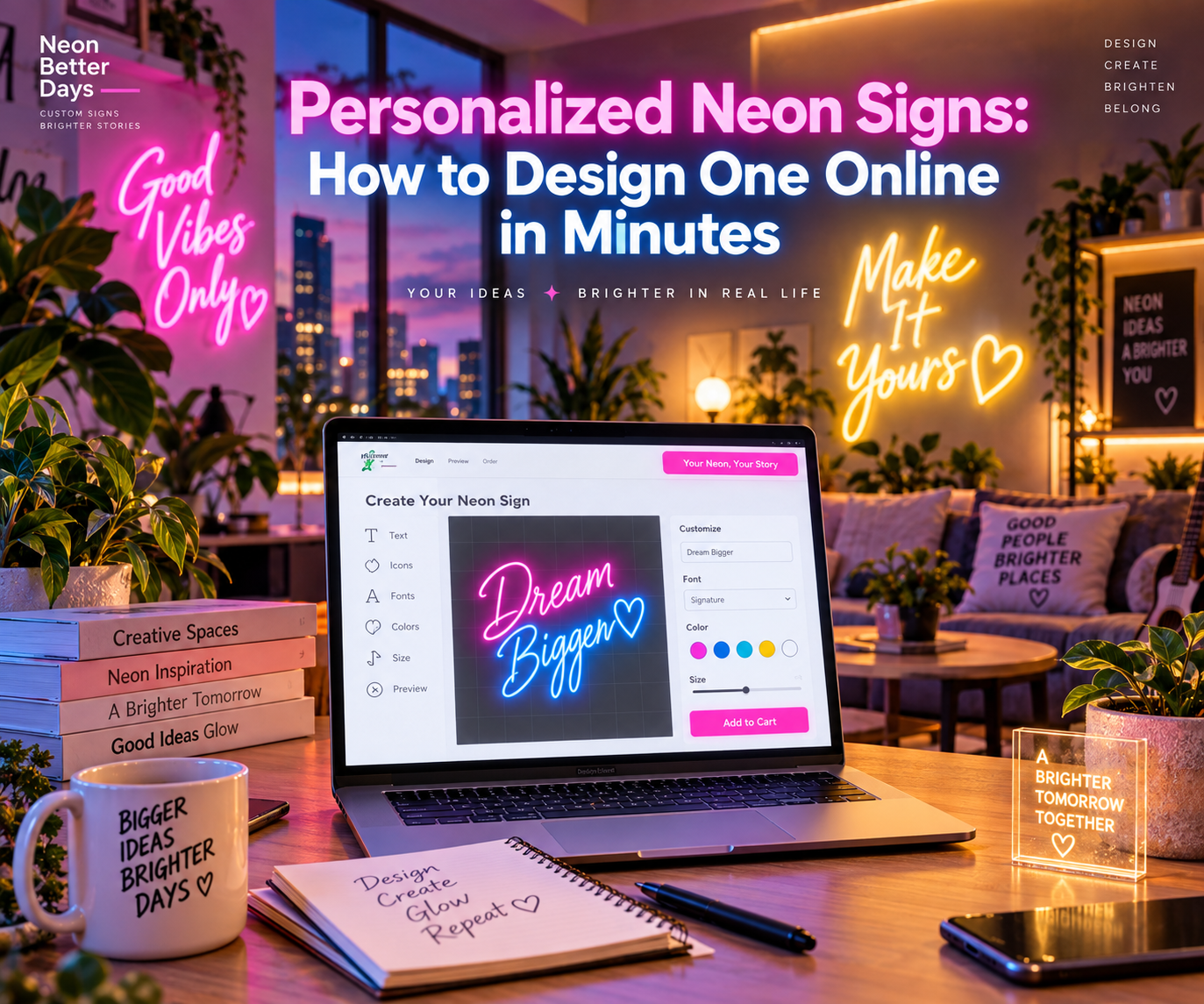
If you are shopping specifically for a bedroom, start with neon signs for bedrooms or use the custom neon sign builder to choose wording, size, color, and a design that fits the room.
What Makes an LED Neon Sign Safe?
A bedroom-ready LED neon sign should meet these basic conditions:
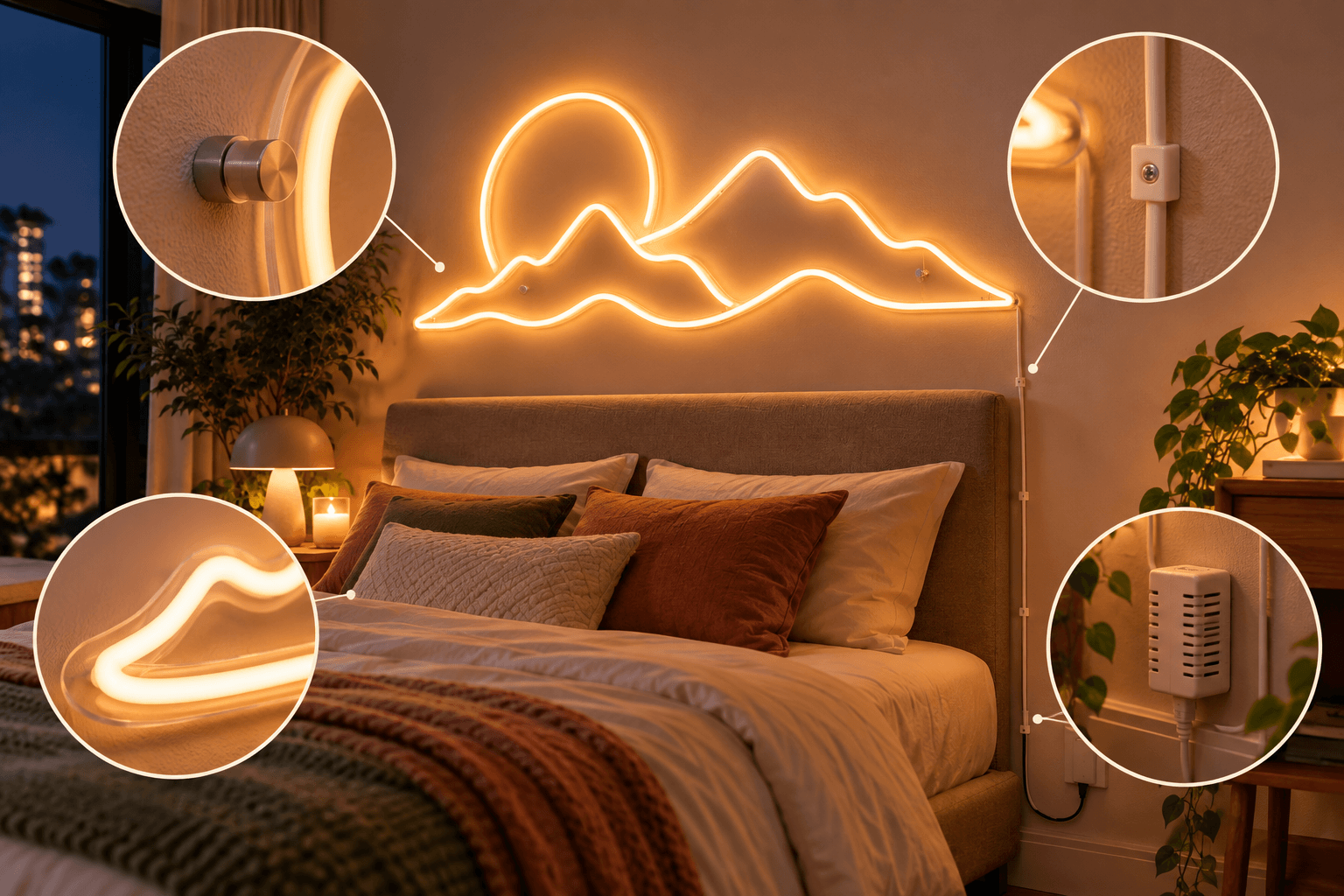
· A compatible, correctly rated power adapter is supplied with the sign.
· The sign is intended for indoor use and the installation location matches its rating.
· Cables, plugs, connectors, and the adapter show no visible damage.
· The sign is fixed securely using mounting hardware suited to its weight and wall type.
· The power adapter has open space around it and is not covered by bedding, curtains, clothing, or rugs.
· The seller provides clear electrical specifications, installation guidance, warranty details, and support.
How LED Neon Signs Work
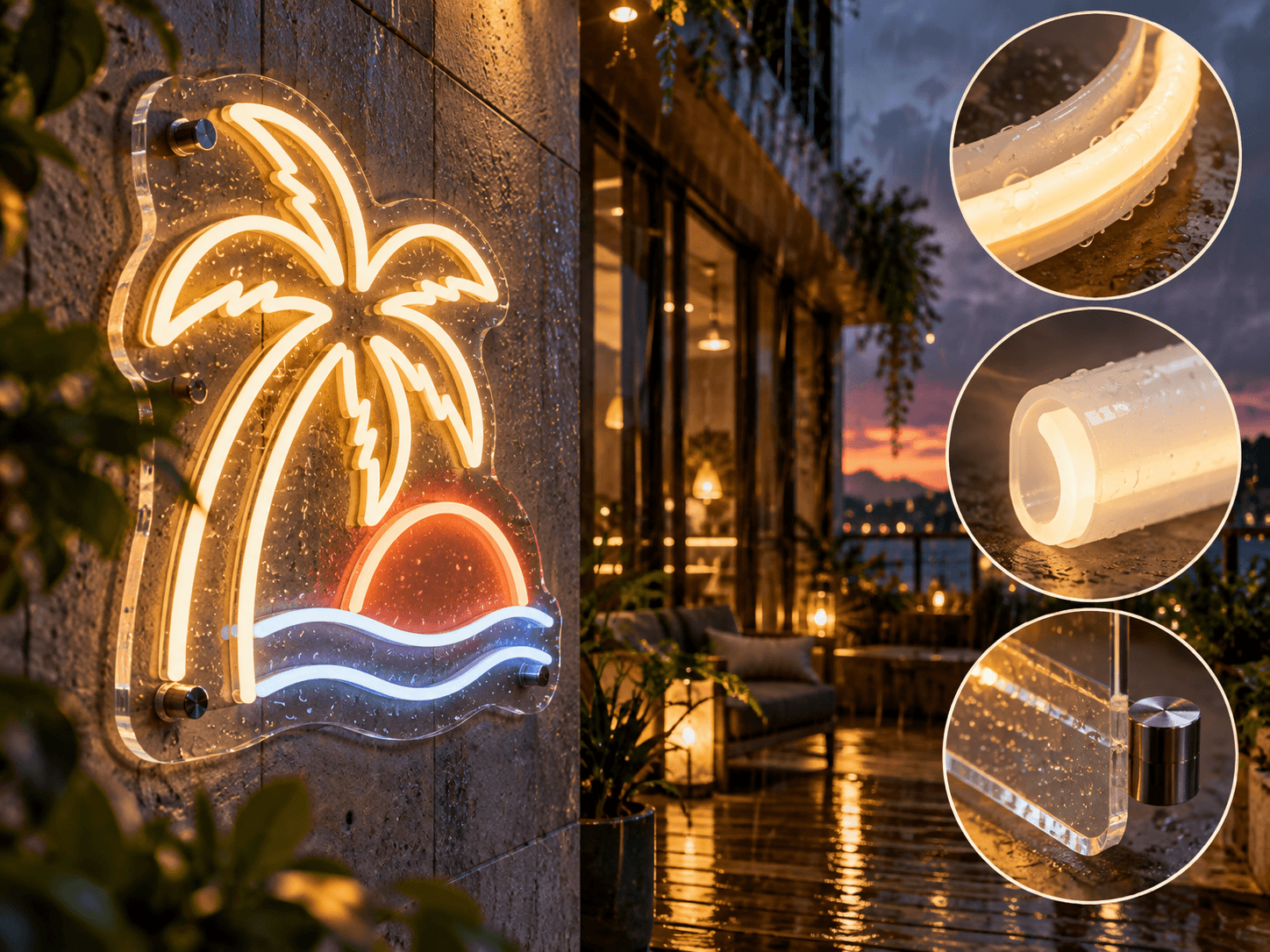
LED neon uses light-emitting diodes inside flexible silicone or PVC-style tubing to create a continuous glow. The illuminated tubing is commonly mounted on an acrylic backboard. A power adapter converts household electricity to the lower voltage required by the sign.
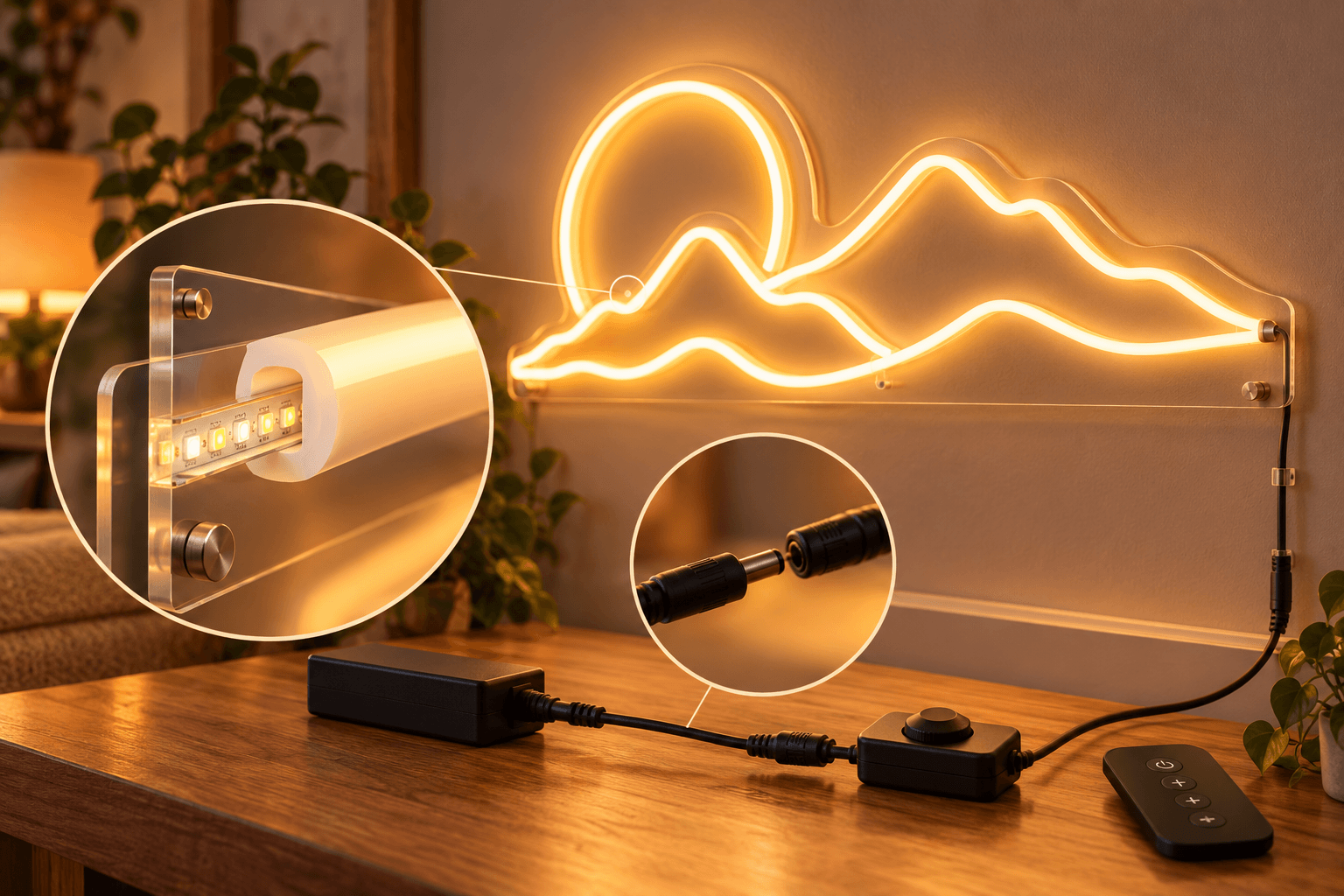
Many custom neon lights also include a dimmer or remote control. These controls are useful in bedrooms because the sign can be bright for decoration and reduced to a softer level in the evening.
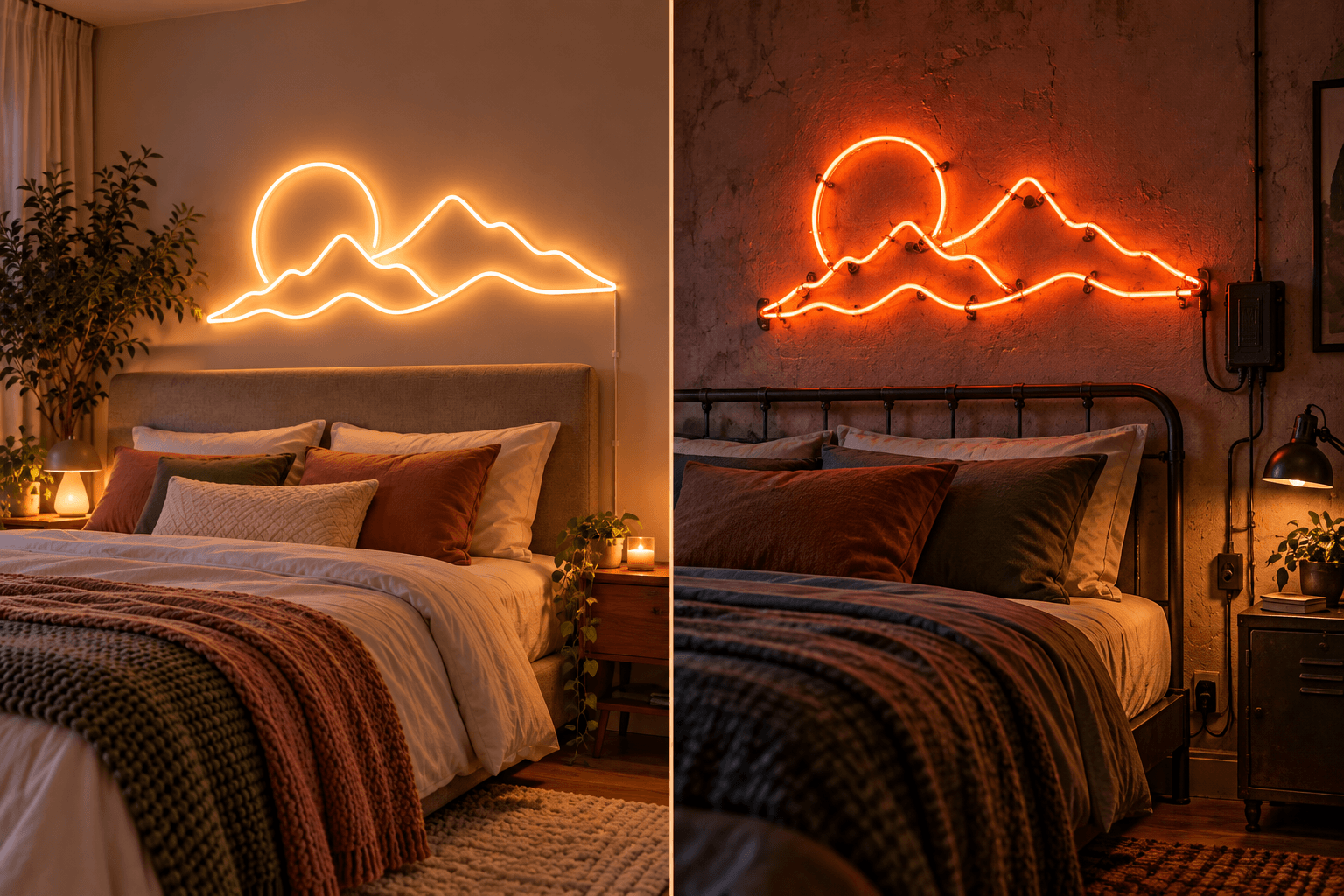
LED Neon vs. Traditional Glass Neon: Bedroom Safety Comparison
|
Factor |
LED Neon |
Traditional Glass Neon |
|
Lighting material |
Flexible LED tubing |
Gas-filled glass tubes |
|
Operating system |
Low voltage at the sign after power conversion |
High-voltage system used to illuminate gas |
|
Surface heat |
Usually cool to mildly warm in normal use |
Can become warmer during operation |
|
Breakage concern |
No fragile glass tubing |
Glass can break if struck or mishandled |
|
Bedroom practicality |
Commonly suited to indoor decorative use when installed correctly |
Requires greater care because of glass and electrical setup |
|
Main buyer check |
Adapter quality, wiring, rating, mounting, seller support |
Glass condition, transformer, installation, handling |
For a more detailed technology comparison, see LED neon signs vs. glass neon.
Do LED Neon Signs Get Hot?
The illuminated face of an LED neon sign usually stays cool or only mildly warm during normal use. That is one reason LED neon is easier to use around bedrooms, home offices, and living areas than glass neon.
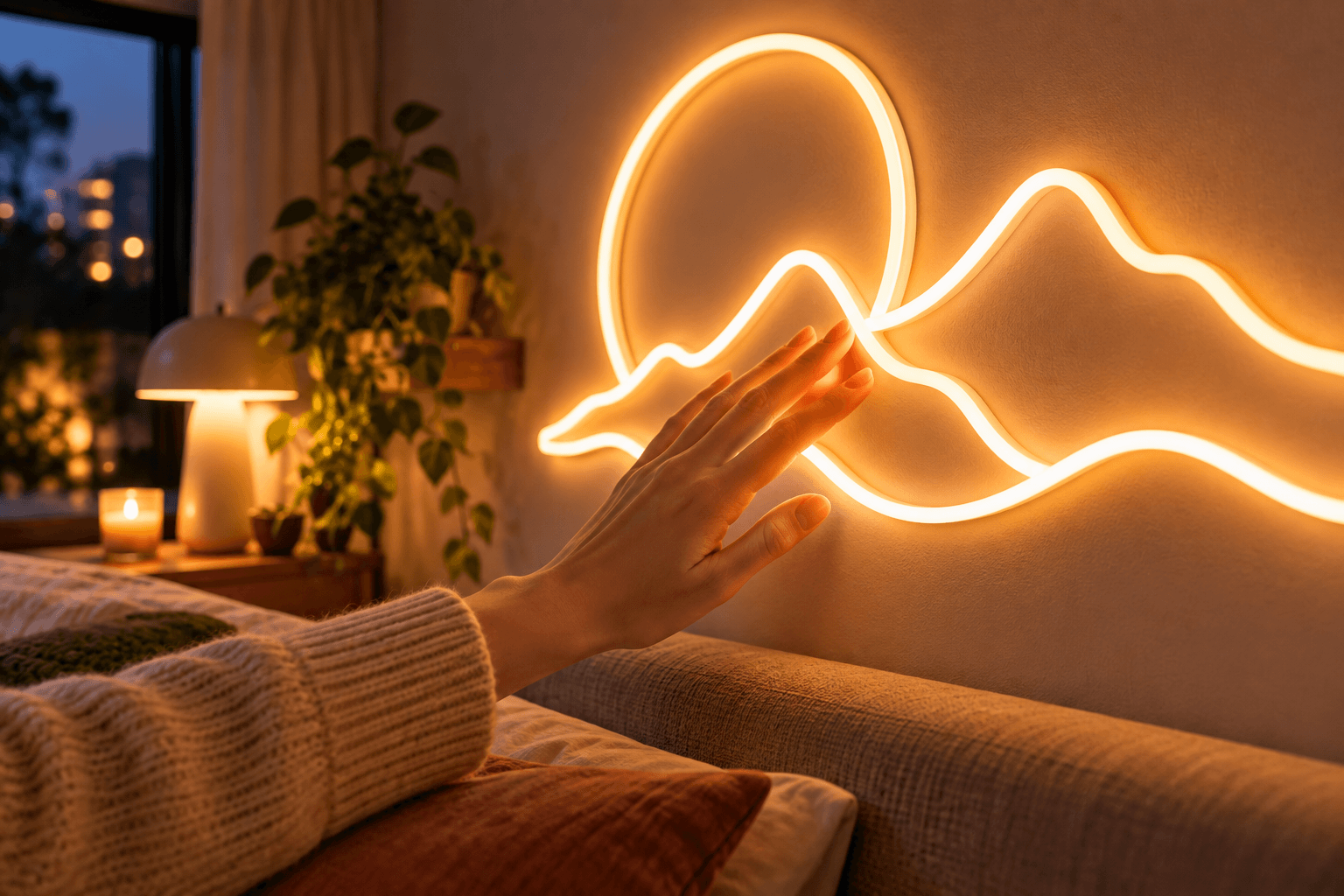
The important detail is that the power adapter, controller, and connectors can still warm up. Never bury an adapter under a pillow, blanket, rug, upholstered furniture, clothing, or paper. Leave open space around it so heat can dissipate.
Can You Leave an LED Neon Sign On Overnight?
A quality sign may be designed for extended operation, but switching it off before sleeping is the safer household routine unless the manufacturer specifically states that the complete product is suitable for continuous unattended use. Turning it off also reduces unnecessary operating time and power use.
A dimmer helps control brightness, but dimming is not the same as switching the sign off. The adapter can remain energized when the sign is connected to power.
What to Check Before Buying an LED Neon Sign for a Bedroom
A buying decision should go beyond design and price. Use the following checklist before ordering.
|
Buyer Check |
What to Look For |
|
Power specifications |
Look for the adapter input/output voltage, current rating, wattage, and clear compatibility with the sign. |
|
Safety certification or listing |
Ask what part of the product is certified or listed and by which recognized testing organization. Do not rely on an unexplained logo in a product image. |
|
Indoor/outdoor rating |
Use an indoor-rated sign only in dry indoor locations. A bathroom, covered patio, or damp area may require a different rating. |
|
Cable and connector quality |
Cables should be intact, strain-relieved, and long enough to reach the outlet without being pinched or stretched. |
|
Mounting hardware |
The seller should provide or recommend mounting hardware that matches the sign size and backboard style. |
|
Dimmer and controls |
For bedrooms, brightness control is useful for comfort and glare reduction. |
|
Warranty and support |
Check coverage for the adapter, controller, LEDs, and other electrical parts, plus how replacement parts or support are handled. |
|
Installation instructions |
A reputable seller should explain mounting, cable routing, connection steps, and operating limits. |
If you are comparing sellers and product specifications, use this custom neon sign buying checklist before placing an order.
Red Flags That Should Make You Reconsider a Purchase
· No electrical specifications are shown for the sign or adapter.
· The seller cannot explain the sign's indoor/outdoor rating.
· The adapter appears generic and there is no clear compatibility information.
· There are no installation instructions or mounting details.
· Warranty terms exclude the main electrical components or are difficult to find.
· The seller recommends using any adapter with a matching plug.
· Product images show certification marks, but the seller cannot identify what component was evaluated.
Safe Placement in Bedrooms and Kids' Rooms
Placement matters as much as product quality. A securely installed sign is less likely to be pulled down, struck, or damaged during everyday use.
· Keep the sign, adapter, and cable away from curtains, bedding, and loose fabric.
· Route cables where they cannot be tugged, tripped over, or pinched behind furniture.
· Keep cords and controls out of reach of young children.
· Avoid mounting directly above a crib or bunk bed.
· Keep drinks, humidifiers, and other water sources away from electrical parts.
· Do not use an indoor-only sign in a damp room or outdoor location.
· Use suitable wall anchors and mounting hardware for the sign's size and weight.
· Position the sign so the light does not shine directly into the sleeper's eyes.
Before drilling or routing the cable, review the neon sign installation guide.
How to Choose the Right Bedroom Neon Sign
Safety comes first, but comfort and fit also affect whether the sign works well in a bedroom. Consider these four points:
1. Choose a size that fits the wall
Measure the available wall area and leave enough space around the sign so it does not feel crowded. Oversized signs can dominate a small bedroom and may require more secure mounting.
2. Pick a comfortable color
Warm white, soft pink, amber, and other lower-intensity colors often feel calmer in bedrooms. Brighter colors can still work if the sign includes a dimmer.
3. Keep the wording personal and readable
Names, initials, short quotes, and simple phrases are easier to read and usually work better than long sentences.
4. Decide where the power will run
Choose the wall location only after checking where the nearest suitable outlet is. Avoid plans that require a cable to cross a doorway, walkway, bed, or heavily used furniture area.
For sizing help, see the neon sign size guide. For color selection, the neon colors guide can help you compare common options.
Warning Signs: Stop Using the Sign If You Notice These Problems
|
Warning Sign |
Possible Problem |
|
Burning smell |
Overheating component or damaged insulation |
|
Buzzing or crackling |
Loose or failing electrical connection |
|
New or irregular flickering |
Unstable power supply, controller issue, or failing LED section |
|
Damaged or exposed cable |
Shock or short-circuit risk |
|
Discoloration around a plug or connector |
Heat damage from a poor connection |
|
Adapter becomes unusually hot |
Adapter may be overloaded, poorly ventilated, incompatible, or failing |
|
Intermittent power |
Developing fault in the cable, adapter, connector, controller, or sign |
Unplug the sign if you notice any of these problems. Do not substitute a random adapter simply because the connector fits; voltage, polarity, current rating, and wattage still need to match the sign.
Is an LED Neon Sign a Good Choice for a Bedroom?
For most buyers, LED neon is the more practical neon-style option for a bedroom because it avoids fragile glass tubing, generally produces less surface heat, and works from lower-voltage power at the sign. The best choice is a product with clearly stated specifications, a correctly matched adapter, secure mounting instructions, brightness control, and reliable support.
If a seller gives you only design choices but little information about the power supply, rating, installation, and warranty, treat that as a reason to compare alternatives before buying.
FAQs
Are LED neon signs safe for bedrooms?
Yes, properly made LED neon signs are generally suitable for bedroom use when they have a compatible power adapter, secure mounting, undamaged wiring, and are used according to the manufacturer's instructions.
Are LED neon signs safe for kids' rooms?
They can be, but placement needs extra care. Mount the sign and cables out of reach, avoid placing it directly above a crib or bunk bed, and keep the adapter away from bedding, curtains, and water.
Can I leave an LED neon sign on all night?
Switching it off before sleeping is the safer household routine unless the manufacturer specifically confirms the complete product is intended for continuous unattended use.
Do LED neon signs get hot enough to cause a fire?
The illuminated tubing generally stays cool to mildly warm, but the adapter and electrical parts can still generate heat. Keep them ventilated and away from combustible materials. Stop using the sign if you notice unusual heat, odor, damaged wiring, or discoloration.
What voltage do LED neon signs use?
Many LED neon signs operate at low voltage after power conversion, commonly 12V or 24V depending on the product. Always use the adapter specified for the exact sign.
Is LED neon safer than traditional glass neon?
For typical home use, LED neon usually has practical safety advantages because there is no fragile glass tube and the sign operates at lower voltage after power conversion. Product quality and correct installation still matter.
What should I check before buying a neon sign online?
Check the electrical specifications, adapter details, indoor/outdoor rating, mounting instructions, certification or listing information, warranty coverage, return terms, and customer support. A seller should be able to answer basic questions about these items.
Can I plug an LED neon sign into an extension cord?
A properly rated extension cord may be used when necessary, but direct connection to a suitable outlet is preferable. Do not place extension cords under rugs or furniture, and do not overload a power strip.
Final Buying Checklist
· Correct adapter supplied and clearly rated for the sign
· Indoor/outdoor rating matches the planned location
· No damaged cables, connectors, or electrical parts
· Clear installation and mounting instructions
· Secure mounting method for the wall type and sign weight
· Dimmer or brightness control for bedroom comfort
· Warranty coverage for electrical components
· Seller can explain certification/listing claims and product specifications
· Cable route can reach the outlet safely without being pinched or creating a trip hazard
Get 25% OFF on All ProductsCode:NEON25View Offers!
Neon Collection50% OFF