
 we're online
Are LED Neon Signs Waterproof?
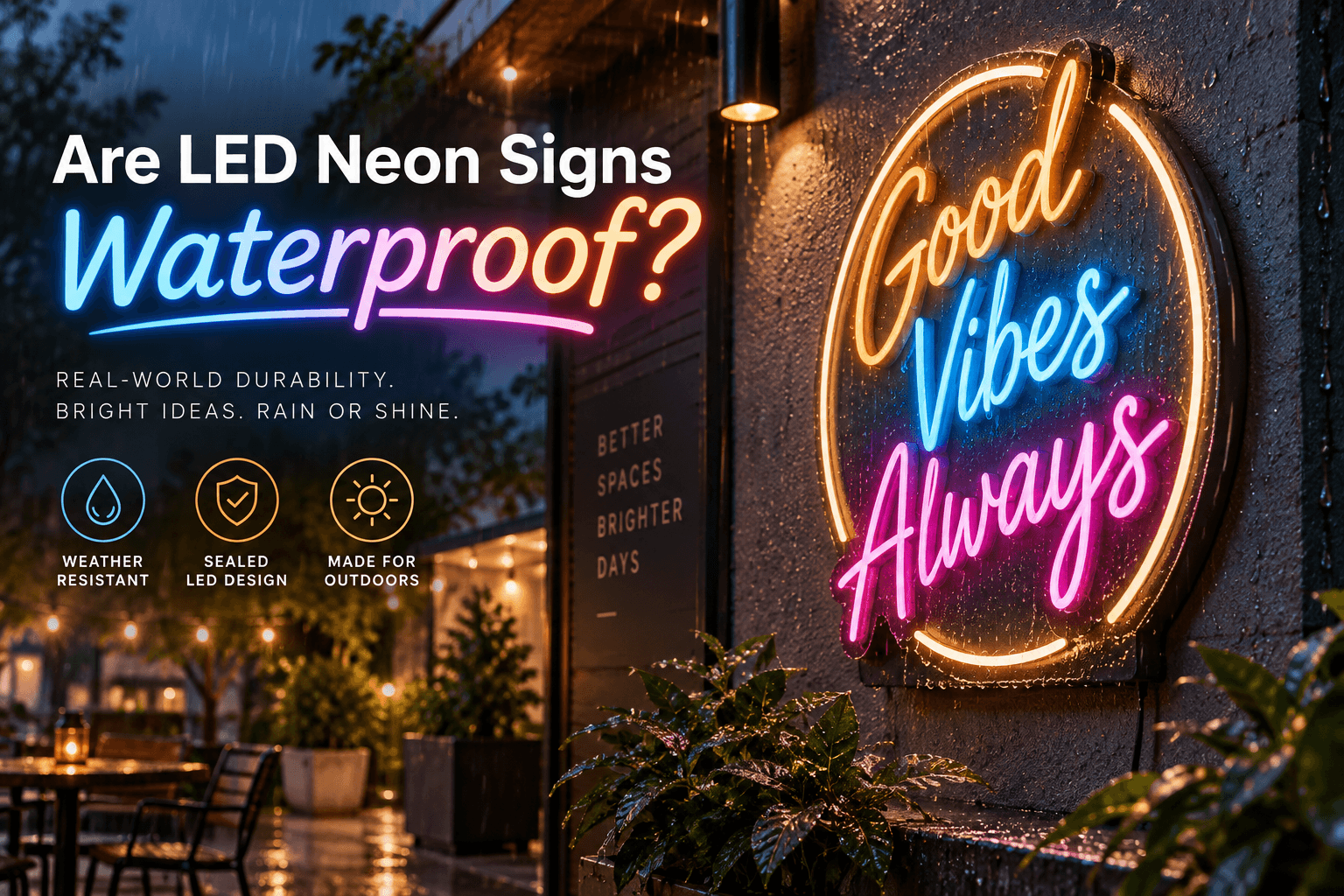
Most LED neon signs are water-resistant, not completely waterproof. A standard indoor sign should not be exposed to rain unless the manufacturer confirms it has an outdoor-rated build.
Outdoor LED neon signs can include sealed tubing, protected wiring, weather-resistant connectors, and suitable power components. How well a sign withstands water depends on its construction, IP rating, installation, and level of exposure.
Before ordering a custom neon sign, tell the manufacturer exactly where it will be installed. A covered porch, exposed storefront, poolside wall, and outdoor event can each require a different level of water protection.
Water-Resistant vs. Waterproof: What Is the Difference?
“Water-resistant” and “waterproof” are often used as if they mean the same thing, but they describe different levels of protection.
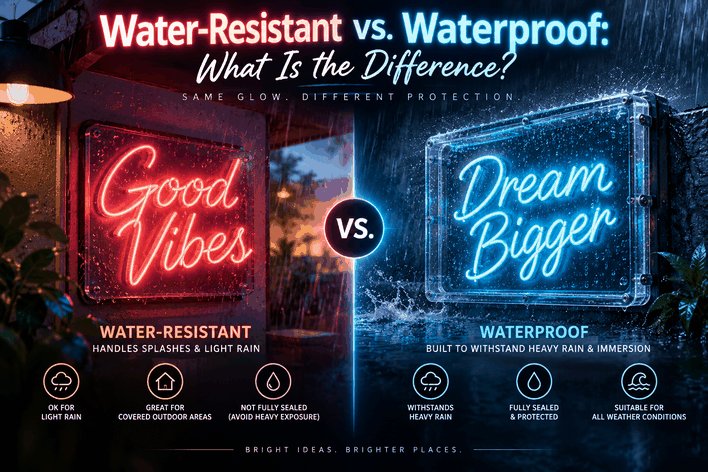
A water-resistant neon sign can withstand limited moisture, such as humidity, light splashes, or brief rain exposure. The exact amount of protection depends on its design and tested rating.
A waterproof product generally offers a higher level of protection from water. However, the word alone does not explain whether a product can handle direct rain, water jets, temporary immersion, or continued submersion.
An IP rating provides more specific information. It uses two digits to classify protection against solid particles and liquids, and the second digit relates specifically to water resistance.
|
Term |
What It Means |
Typical Capability |
|
Water-resistant |
Withstands limited moisture under stated conditions |
Humidity, light splashes, brief rain exposure |
|
Waterproof |
Offers a higher, but still specific, level of protection |
Direct rain, jets, or immersion depending on IP rating |
|
Weatherproof |
A marketing term with no fixed technical meaning |
Should always be backed by a stated IP rating |
The following factors affect whether a sign can be used outdoors:
● Depth of roof or awning coverage
● Direction and frequency of rainfall
● Distance from sprinklers or pools
● Humidity and condensation
● Possibility of flooding or standing water
● Protection of the adapter and controller
● Condition of seals and connectors
Do not rely only on a product description that says “weatherproof.” Ask for the applicable IP rating and the permitted installation conditions in writing.
How LED Neon Signs Are Sealed for Outdoor Use
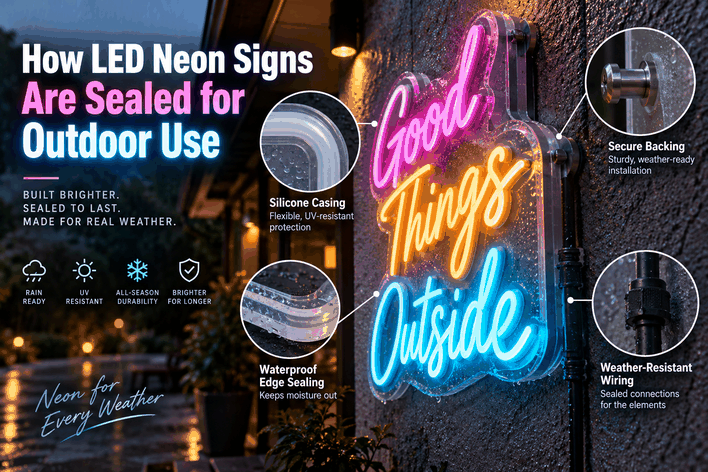
An outdoor sign needs protection across its illuminated tubing, wiring, connectors, controller, adapter, and cable entry points. Water resistance drops as soon as even one component is unsuitable for the location.
Sealed Silicone Tubing
Modern LED neon signs use flexible illuminated tubing rather than gas-filled glass. Silicone-based tubing is common because it can form letters, logos, and curved designs. If you are deciding between the two, this LED neon vs. glass neon sign comparison breaks down the durability differences.
For exterior use, the tubing and its openings may receive added sealing to reduce moisture entry. This protection can help the sign withstand rain and humidity within its approved limits.
A sealed tube should still be inspected for cuts, cracks, loose end caps, or damaged joints. Small openings may allow moisture to reach the internal LED strip.
Weather-Resistant Power Adapters and Connectors
The illuminated sign itself may have stronger water protection than its power adapter, dimmer, controller, plug, or connectors. Check each component separately rather than assuming one rating covers everything.
An adapter intended for indoor use should remain indoors or inside a properly rated outdoor enclosure. Placing it beneath a small cover may not protect it from wind-driven rain or condensation.
Cable connections should stay above ground and away from areas where water gathers. Outdoor outlet covers should be rated for use while a plug remains connected.
Protected Wiring Entry Points
Wiring often enters or exits through openings in the tubing or acrylic backing. These points may need sealing because water can travel along a cable and reach an electrical component.
A cable should include a downward loop before entering an enclosure when the manufacturer recommends it. This arrangement helps water drip away instead of running toward the connection.
Can a Standard Indoor Neon Sign Get Wet?
A standard indoor LED neon sign should be kept dry. A few drops may not cause immediate failure, but that does not make the sign safe for regular outdoor use.

Brief exposure can let moisture enter through unsealed tubing ends, wiring exits, plugs, or controllers. The effects may appear immediately or develop later.
Possible signs of water damage include:
● Flickering LEDs
● Uneven brightness
● Sections that stop lighting
● Corroded connectors
● Discolored backing
● Tripped breakers
● Adapter failure
● Burning smells or unusual heat
Disconnect the sign if it becomes wet. Do not touch a powered electrical connection with wet hands or stand in water while unplugging it, and turn off the circuit first if reaching the plug would be unsafe.
Allowing a sign to dry does not guarantee it is safe to use again. Moisture may remain inside the tubing, adapter, or connector, so contact the manufacturer or a qualified technician before reconnecting a wet sign.
Do not use a pressure washer, garden hose, or direct spray to clean an LED neon sign unless the manufacturer specifically approves that method.
Where Is It Safe to Install a Waterproof Neon Sign?
The correct location depends on the product's verified water protection, electrical accessories, mounting system, and manufacturer instructions.
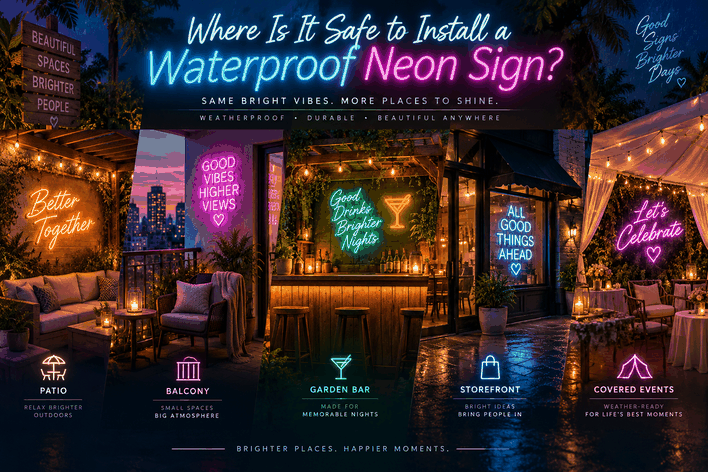
Covered Patios and Porches
A covered patio can reduce direct rainfall, making it a practical location for certain water-resistant signs. Protection still depends on the roof depth and the sign's distance from open sides.
Wind-driven rain, condensation, cleaning water, and sprinklers may still reach areas beneath a roof. Observe the location during poor weather before selecting the sign's required protection.
Keep adapters and controllers in a dry area unless they are specifically rated for outdoor use.
Fully Exposed Outdoor Walls
A sign mounted on an uncovered wall can face direct rain, dust, sunlight, snow, and temperature changes. It needs a build approved for that level of exposure.
Confirm whether the IP rating applies to the complete product or only its tubing. Cable routes and electrical connections should stay protected from running and standing water.
An outdoor rating does not necessarily cover hurricanes, floods, ice accumulation, or pressure washing. Follow the manufacturer's severe-weather guidance.
Near Pools or High-Humidity Areas
Poolside spaces, spas, fountains, and humid locations need careful product selection. Water may reach the sign through splashes, mist, condensation, or wet hands.
A sign described as waterproof is not automatically approved for submersion or installation within a restricted pool area. Local electrical rules may determine the permitted distance from water.
Use a qualified electrician for installations close to pools, fountains, or permanent water features. For help interpreting the numbers on a spec sheet, see how IP ratings measure rain, dust, and moisture protection before you order.
Installation Location vs. Protection Needed
|
Installation Area |
Main Water Risk |
What to Confirm Before Ordering |
|
Covered patio or porch |
Wind-driven rain, condensation |
Roof depth, distance from open sides |
|
Fully exposed outdoor wall |
Direct rain, snow, standing water |
Full-product IP rating, cable routing |
|
Near pools or high humidity |
Splashes, mist, condensation |
Local electrical code, distance from water |
How to Order a Waterproof Custom Neon Sign
Begin by explaining exactly where the sign will be installed. Avoid requesting a “waterproof sign” without describing the actual conditions it will face.
Include these details with your quote request:
● Covered, partially covered, or uncovered placement
● Expected rain direction and frequency
● Local humidity
● Nearby pools, fountains, or sprinklers
● Wall material
● Distance from the power outlet
● Possibility of flooding or standing water
● Permanent or temporary installation
Ask the manufacturer to provide:
● The sign's applicable IP rating
● Permitted level of water exposure
● Protection rating of the adapter
● Protection rating of the controller
● Instructions for outdoor connectors
● Required mounting method
● Cleaning and maintenance guidance
● Outdoor-use warranty conditions
NeonChamp's US website states that weather-resistant options are available for indoor and outdoor locations, including an optional water-resistant build for areas exposed to rain or humidity. Run through the full custom neon sign buying checklist before you approve a design. If you want to preview options first, you can customize your neon sign online and note the outdoor conditions when you request pricing.
The website does not state one protection rating for every outdoor order. Buyers should confirm the required construction and IP rating for their installation before approving production.
Frequently Asked Questions
Are LED neon signs waterproof?
Some LED neon signs have outdoor-rated water protection, but standard indoor signs are not waterproof. Check the product's IP rating and approved installation conditions before exposing it to moisture.
Can I put a neon sign outside in the rain?
Only use the sign in direct rain when the manufacturer confirms it is built for that exposure. Its adapter, controller, plug, and connectors must also be properly protected.
What happens if a neon sign gets wet?
Water may cause flickering, corrosion, short circuits, adapter failure, or permanent LED damage. Disconnect the power safely and contact the manufacturer before using the sign again.
Is there a difference between water-resistant and waterproof neon signs?
Yes. Water-resistant products handle limited moisture under stated conditions. Waterproof products may offer stronger protection, but buyers must still check the specific IP rating and permitted use.
Do waterproof neon signs cost more than standard ones?
They may cost more because exterior construction can require added sealing, protected connectors, and outdoor-suitable electrical components. See the custom neon sign cost guide for how size, design, and materials affect the final price.
Get 25% OFF on All ProductsCode:NEON25View Offers!
Neon Collection50% OFF