
 we're online
Weatherproof Neon Sign Materials Explained
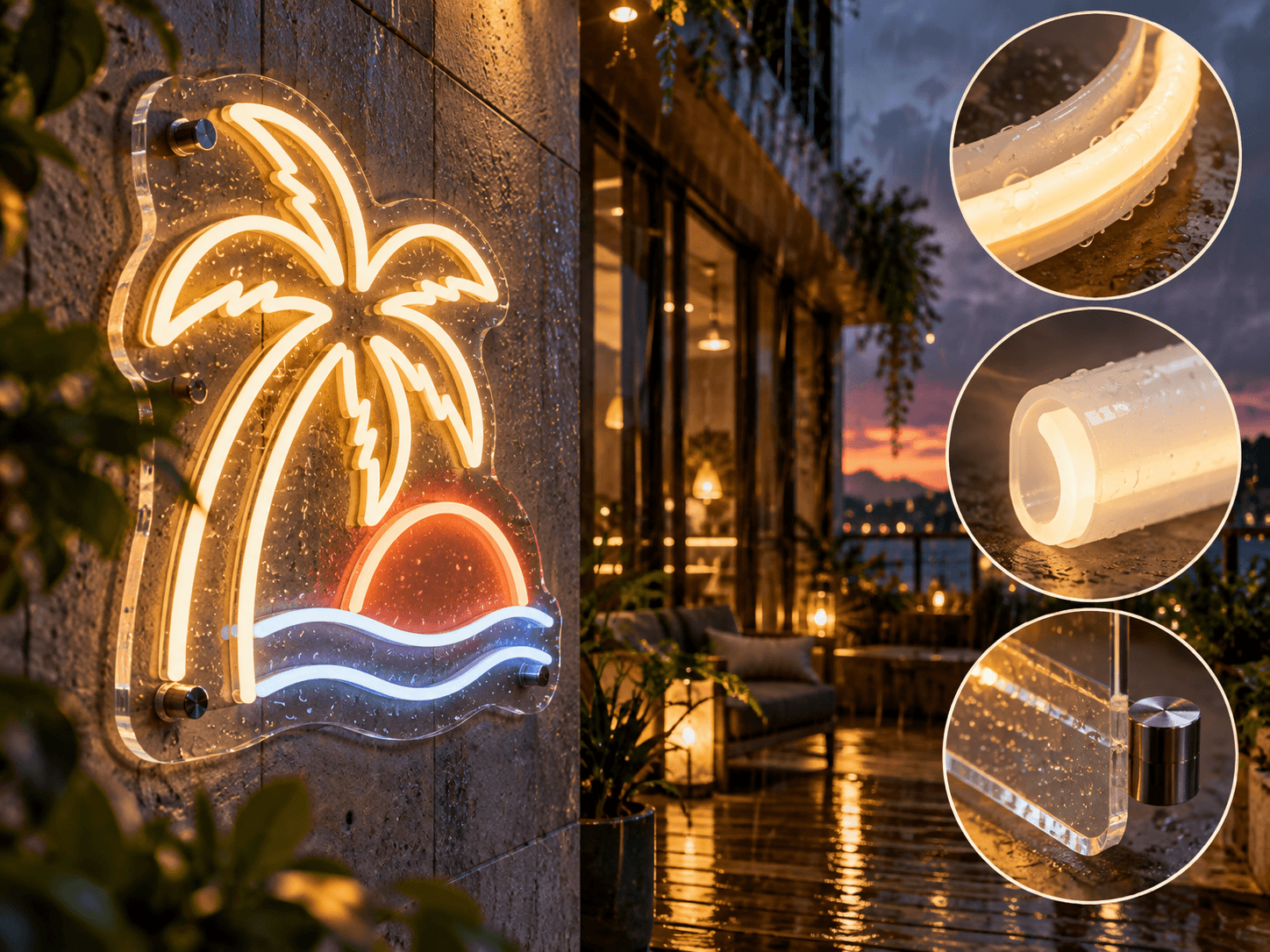
A weatherproof neon sign is not protected by one material alone. Its LED tubing, acrylic backing, wiring, connectors, power accessories, sealants, and mounting hardware all have to work together to handle outdoor conditions.
These parts may face rain, dust, humidity, sunlight, heat, cold, and wind. The construction a sign needs depends on whether it will sit under a roof or on a fully exposed wall.
Understanding weatherproof neon sign materials helps you compare products and avoid installing an indoor sign in a location it was never built for. For broader buying and placement guidance, see the complete buyer's guide to custom neon signs.
Flexible LED Neon Tubing
Modern LED neon signs use flexible illuminated tubing instead of traditional gas-filled glass tubes. The tubing contains LEDs that produce a continuous-looking line of light.
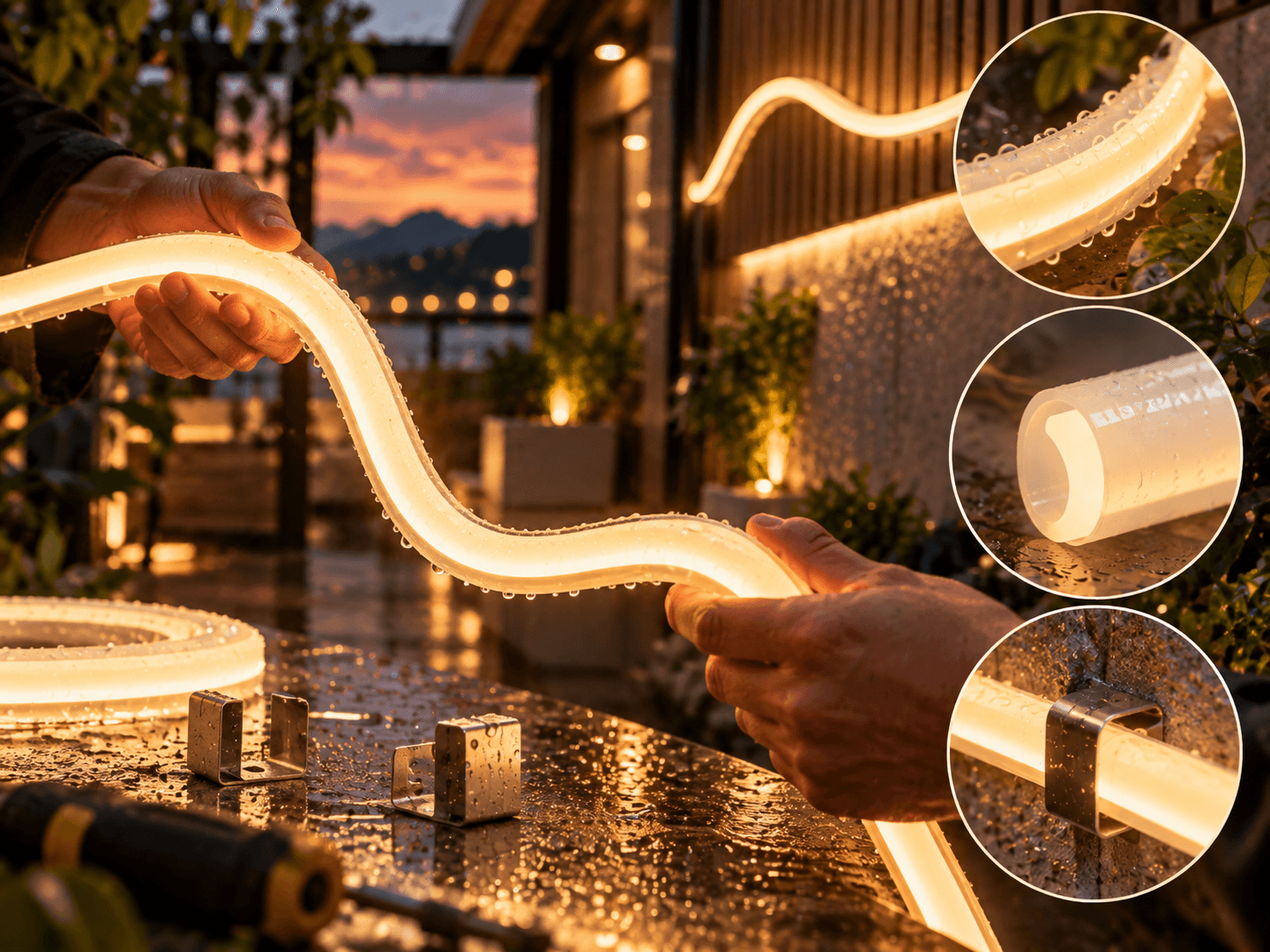
Silicone-based tubing is commonly used because it can bend into letters, logos, symbols, and curved designs. It is also lighter and less likely to break than glass neon.
Outdoor LED tubing can offer several practical benefits:
● Flexible construction for custom shapes
● Lower risk of breakage during handling
● Resistance to normal vibration
● Lower heat production
● Lightweight installation
Material quality still matters. Poor tubing may discolor, harden, crack, or lose flexibility after prolonged exposure to sunlight and temperature changes.
Outdoor tubing should be selected for the expected climate. A material suitable for a covered patio may not be appropriate for an uncovered storefront in an area with frequent storms or intense sunlight.
Why Silicone Is Used Outdoors
Quality silicone can remain flexible through changes in temperature. This reduces the risk of cracking as the material expands in heat and contracts in cold weather.
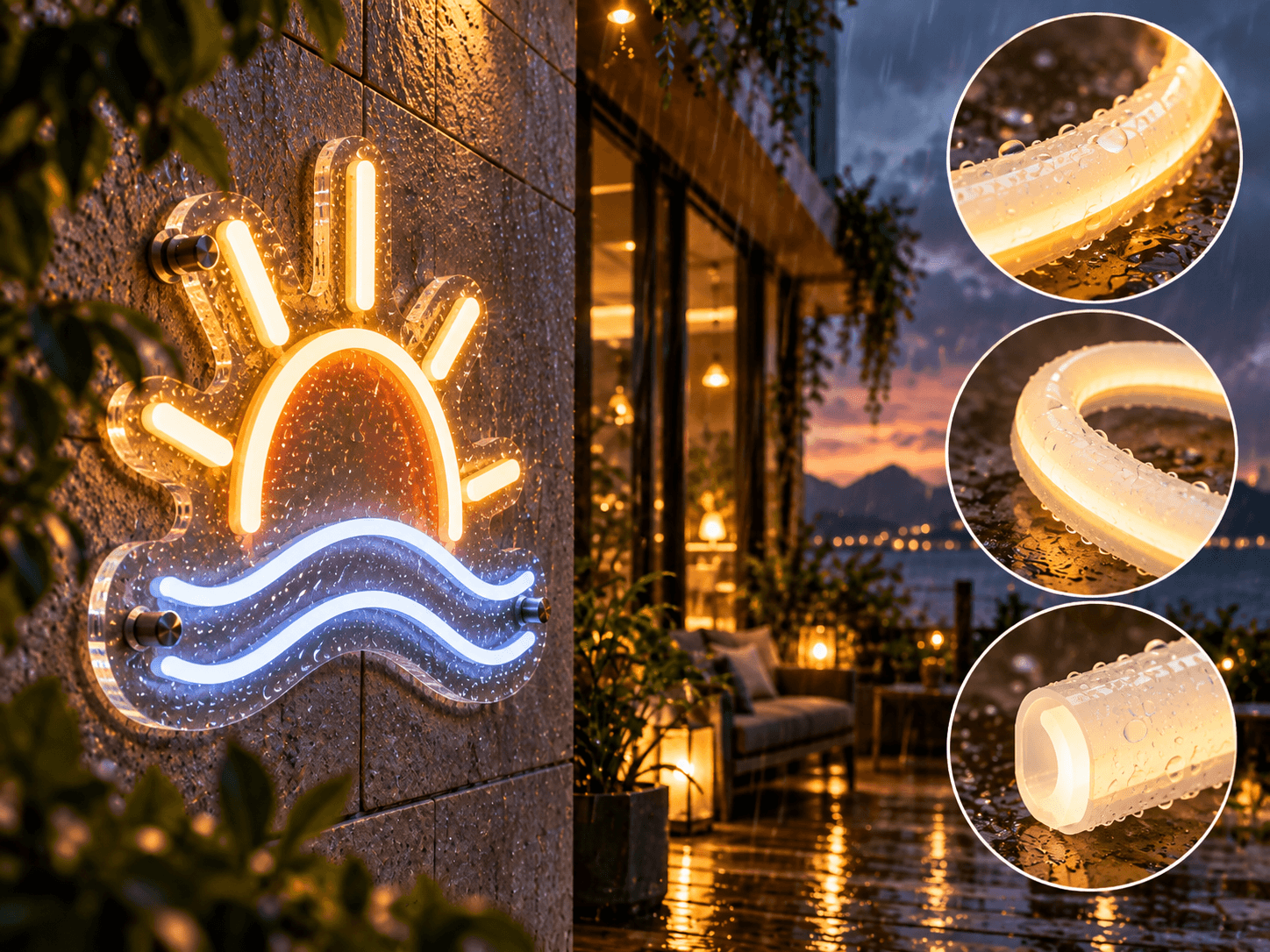
Silicone can also diffuse individual LED points, creating a smooth line of light. However, the tubing material alone does not make the complete sign waterproof.
Moisture may still enter through unsealed tube ends, damaged joints, or wiring openings, so check the complete sign construction rather than assessing the tubing alone.
NeonChamp describes its LED tubing as flexible, shatter-resistant, energy-efficient, and available with optional water-resistant construction for areas exposed to rain or humidity.
UV-Resistant Acrylic Backing
LED tubing is usually attached to an acrylic backboard. The backing supports the design, keeps the tubing in position, and provides holes for hanging or wall mounting.
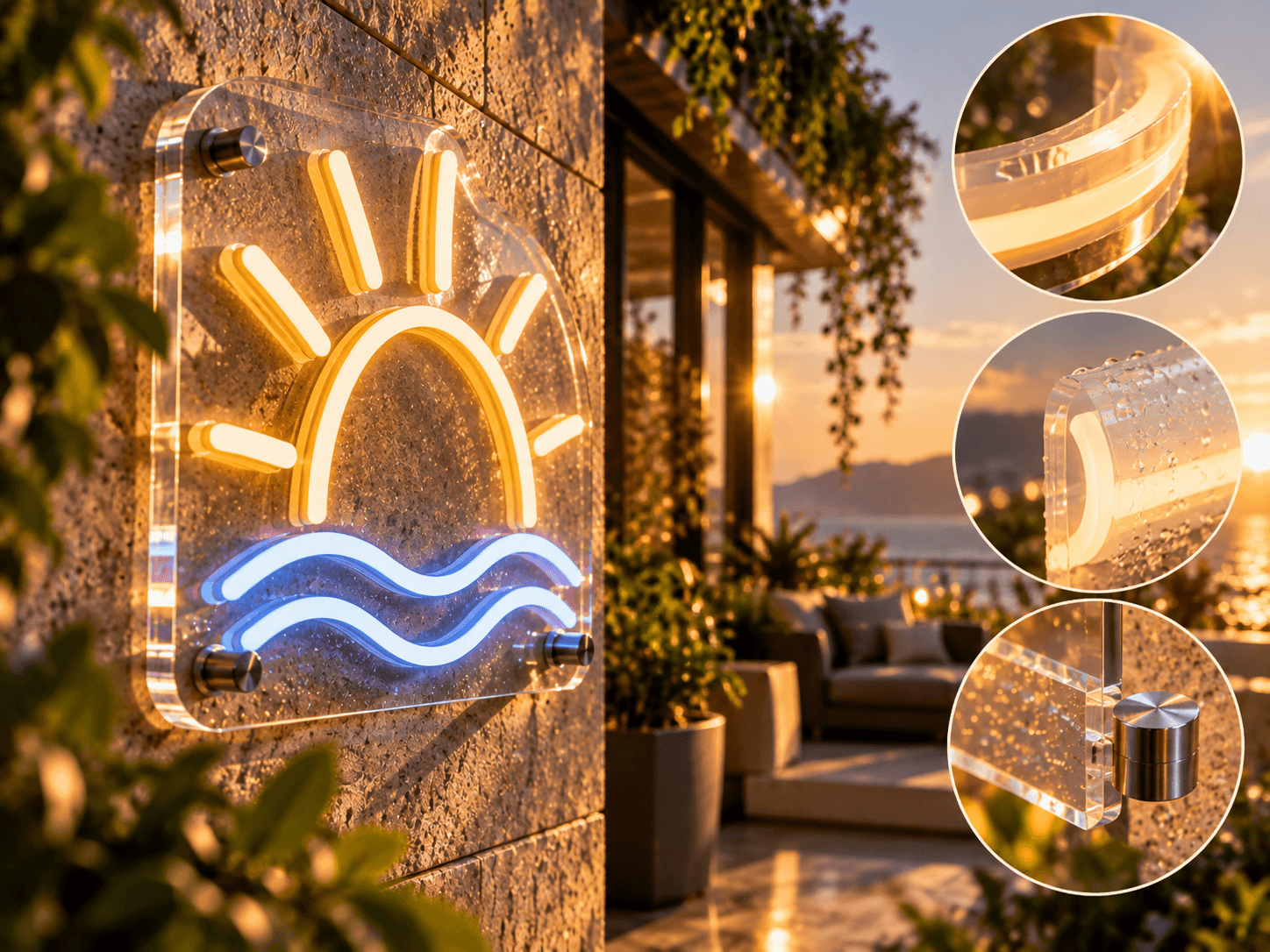
Common options include:
● Cut-to-shape backing
● Rectangular backing
● Clear acrylic
● Colored acrylic
● Frosted acrylic
● Printed acrylic
Clear backing creates a floating appearance. Colored, printed, or frosted backing can provide stronger daytime contrast when the tubing and wall share similar colors.
Outdoor acrylic should be suitable for sunlight, moisture, heat, and cold. Acrylic that lacks adequate ultraviolet resistance may yellow, fade, weaken, or become brittle after extended exposure.
Heat can also affect a thin or poorly supported backboard. Large backing panels may bend or warp when placed against a hot exterior wall.
Acrylic Thickness and Mounting Support
The correct acrylic thickness depends on the size, weight, shape, mounting points, and expected wind exposure.
Mounting holes should distribute the sign's weight evenly. Screws must not be overtightened, since excessive pressure can crack the backing.
Spacers may help keep the acrylic level on brick, stone, or stucco. They can also prevent the backing from being forced against an uneven surface.
Ask whether the selected backing is approved for long-term outdoor use, and whether the warranty covers discoloration, cracking, or warping.
Sealed Wiring and Connectors
Wiring and electrical connections are the most vulnerable parts of an outdoor neon sign. Water can enter through tube ends, cable joints, controller ports, wiring exits, and plug connections.
Outdoor construction may include:
● Sealed tube ends
● Protected wiring entry points
● Weather-resistant connectors
● Cable glands
● Covered junctions
● Outdoor-suitable cables
● Protective enclosures
Cable glands secure cables where they pass through an enclosure. When correctly installed, they can reduce cable movement and moisture entry.
Sealants may also be applied around joints and openings. The selected sealant should stay flexible and bonded through exposure to heat, cold, and moisture.
Power Adapters and Controllers
The illuminated sign, power adapter, controller, dimmer, and connectors may each carry a different protection rating.
A water-resistant sign can still fail if an indoor adapter is left in the rain. Ask the manufacturer where each component can be safely installed.
An adapter may need to stay indoors or inside an outdoor-rated enclosure. Cable connections should remain above ground and away from places where rainwater collects.
A downward cable loop may also be required before the cable enters an enclosure. This lets water drip away instead of running toward the electrical opening.
Learn how these protection levels are measured in Outdoor Neon Sign IP Ratings Explained, and for water-exposure limits specifically, see Are LED Neon Signs Waterproof?.
Adhesives and Sealants
Adhesives may hold LED tubing, smaller components, or protected joints in place. Outdoor adhesives need to retain their strength through changes in temperature and humidity.
An indoor adhesive may soften during hot weather, weaken when wet, or become brittle in cold temperatures. This can let tubing or other components separate from the backing.
Weather-resistant sealants can protect selected openings and joints. They must be compatible with silicone, acrylic, cables, and connector materials.
Applying household caulk to an indoor sign does not make it suitable for outdoor use. Unauthorized sealants may damage the sign, block repair access, or affect its warranty. Do not modify seals unless the manufacturer instructs you to.
Mounting Hardware for Outdoor Walls
Mounting hardware secures the sign to a wall or support structure. Exterior fasteners must tolerate moisture, temperature changes, wind, and the sign's weight.
A mounting kit may include:
● Screws
● Wall anchors
● Standoffs
● Spacers
● Brackets
● Hanging cables
● Washers
Corrosion-resistant hardware is important because rust can weaken fasteners and stain the backing or wall. The mounting hardware should also match the surface.
Brick and Concrete
Brick and concrete generally require masonry drill bits, suitable anchors, and exterior-grade screws. Weak mortar or damaged masonry may not provide secure support.
Wood and Siding
Fasteners should connect to a secure structural point rather than relying only on thin siding. Drilled openings may need sealing to prevent water from entering the wall.
Stucco
Stucco may crack when drilled incorrectly. The installer must identify the material behind it and use an anchor with suitable depth and load capacity.
Glass
Window-mounted signs may require hanging cables, frames, or approved adhesive systems. Any non-drilling method must support the sign's weight across the expected temperature range.
Use this guide to installing your neon light to review wall preparation, tools, mounting, and power connections.
Weatherproof Materials at a Glance
Here is how each component contributes to overall weather resistance:
|
Component |
Purpose |
Weatherproofing Feature |
|
LED tubing |
Produces the illuminated line of light |
Flexible, UV-stable silicone; sealed tube ends |
|
Acrylic backing |
Supports the design and mounting points |
UV-resistant, non-yellowing, warp-resistant acrylic |
|
Wiring and connectors |
Carries power to the tubing |
Cable glands, sealed entry points, weather-resistant connectors |
|
Power adapter and controller |
Regulates and supplies power |
Matched IP rating; indoor or outdoor-rated enclosure |
|
Adhesives and sealants |
Bonds joints and openings |
Weather-resistant formulas stable in heat, cold, and moisture |
|
Mounting hardware |
Secures the sign to the wall |
Corrosion-resistant screws, anchors, and brackets |
How Material Quality Affects Sign Lifespan
Outdoor exposure reveals weaknesses that may never appear in a controlled indoor space. Low-quality tubing may harden, acrylic may yellow, adhesives may release, and unprotected hardware may corrode.
Quality materials reduce these risks, but installation and maintenance still matter. Even a well-made sign can fail early when its adapter sits in water, cables stay under tension, or damaged seals are ignored.
Factors that affect product life include:
● Daily operating hours
● Rain and humidity
● Direct sunlight
● Extreme temperatures
● Salt exposure
● Power stability
● Installation quality
● Cleaning methods
● Seasonal maintenance
Ask the manufacturer which materials are used, what weather conditions they support, and how frequently they should be inspected.
Choosing a Neon Sign Built for Your Climate
Outdoor signs should be manufactured for the climate in which they will actually operate.
Hot and Sunny Regions
Look for UV-resistant acrylic, heat-suitable tubing, durable adhesives, and protected power components. Check whether the wall receives direct afternoon sunlight.
Cold and Snowy Regions
Tubing, seals, backing, and cables should tolerate low temperatures without becoming brittle. Remove snow or ice according to the manufacturer's instructions.
Coastal and Humid Regions
Salt and moisture can increase corrosion. Ask for protected connectors, corrosion-resistant fasteners, suitable wiring, and cleaning guidance. Frequent inspections may be needed to catch salt buildup, loose seals, or corroded hardware early.
|
Climate |
Priority Materials |
Extra Precaution |
|
Hot and sunny |
UV-resistant acrylic, heat-suitable tubing |
Check for direct afternoon sun exposure |
|
Cold and snowy |
Cold-tolerant tubing, seals, and cables |
Follow manufacturer snow/ice removal guidance |
|
Coastal and humid |
Corrosion-resistant fasteners and connectors |
Inspect regularly for salt buildup and loose seals |
Questions to Ask Before Ordering
Ask the manufacturer:
What material is used for the LED tubing?
Is the acrylic backing UV-resistant?
Are wiring entry points sealed?
Where should the adapter and controller be installed?
Is the hardware corrosion-resistant?
Are the materials suitable for the local climate?
What cleaning products are safe?
What weather conditions are excluded from the warranty?
Frequently Asked Questions
What materials make a neon sign weatherproof?
Outdoor construction may combine sealed silicone tubing, UV-resistant acrylic, protected wiring, suitable connectors, exterior sealants, protected power components, and corrosion-resistant hardware.
Is acrylic backing safe for outdoor sun exposure?
Yes, when it is made for outdoor UV and temperature exposure. Confirm that the selected backing resists yellowing, cracking, and warping.
Do weatherproof neon signs need special mounting hardware?
Yes. Fasteners should suit the wall material, sign weight, moisture, and wind exposure. Corrosion-resistant hardware is generally recommended.
How long do outdoor neon sign materials last?
Service life depends on material quality, climate, operating hours, installation, cleaning, and maintenance.
Are weatherproof neon signs more expensive?
They may cost more because outdoor construction can require upgraded tubing, sealing, backing, connectors, power accessories, and mounting hardware. See what affects custom neon sign cost for a full breakdown.
Get 25% OFF on All ProductsCode:NEON25View Offers!
Neon Collection50% OFF