
 we're online
Custom Business Logo Neon Signs: A Buyer’s Guide for Storefronts, Offices, and Customer Spaces
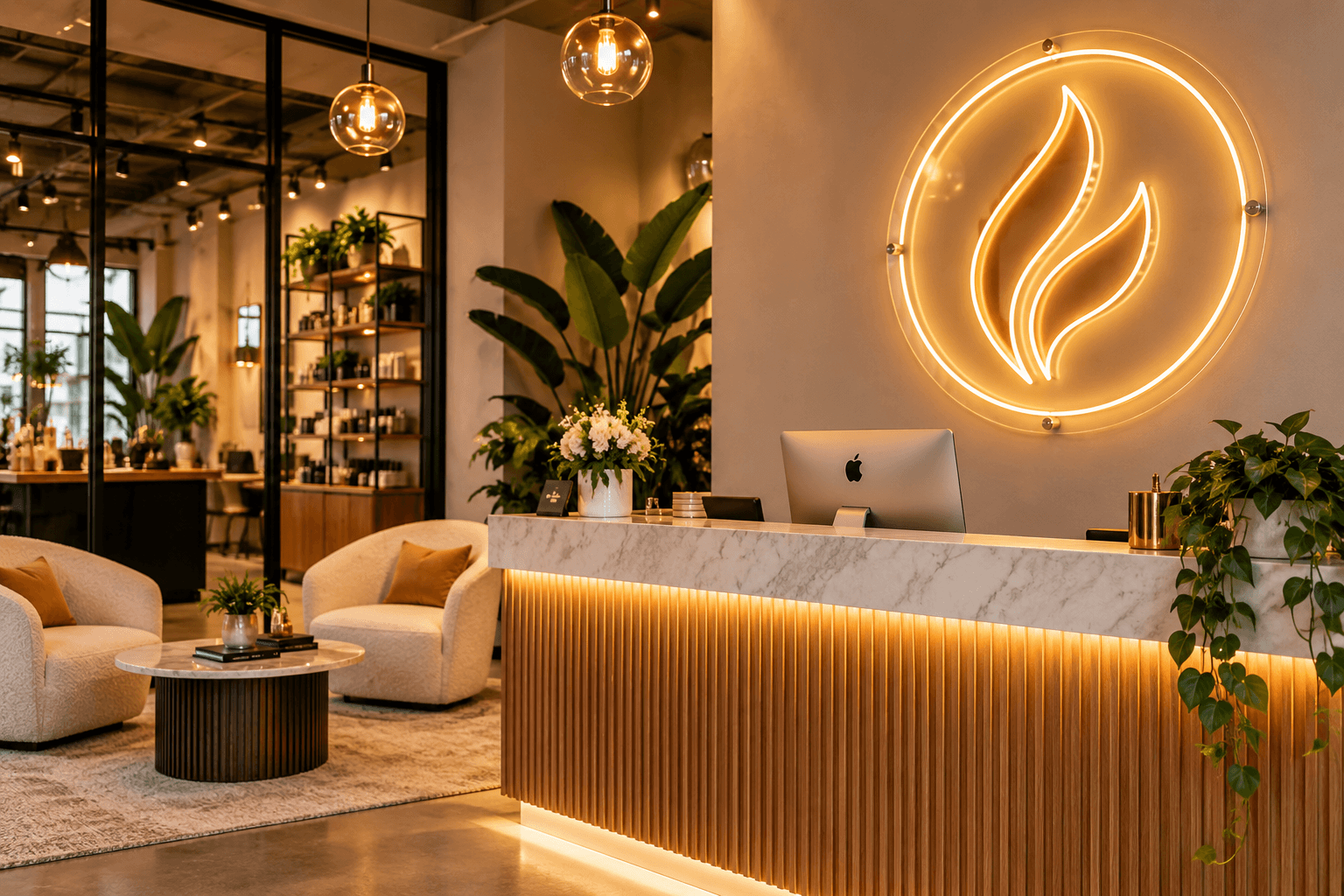
A custom logo neon sign can turn a familiar brand mark into a visible, illuminated feature for a storefront, reception desk, restaurant, salon, gym, office, or event booth. The best result is not simply the brightest sign. It is a sign that keeps the logo recognizable, stays readable from the intended distance, fits the installation area, and is built for the conditions where it will be used.
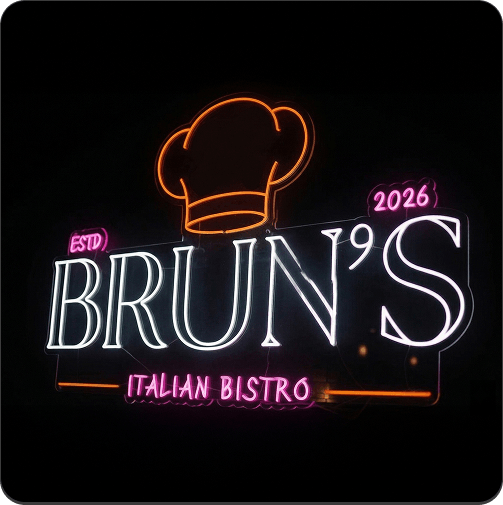
If you already have brand artwork, start with a dedicated logo neon signs option rather than rebuilding the logo as plain text. A logo-based process makes it easier to preserve shapes, spacing, and brand identity during proofing.
What Should You Check Before Ordering?
Before approving a custom LED logo sign, confirm these eight points:
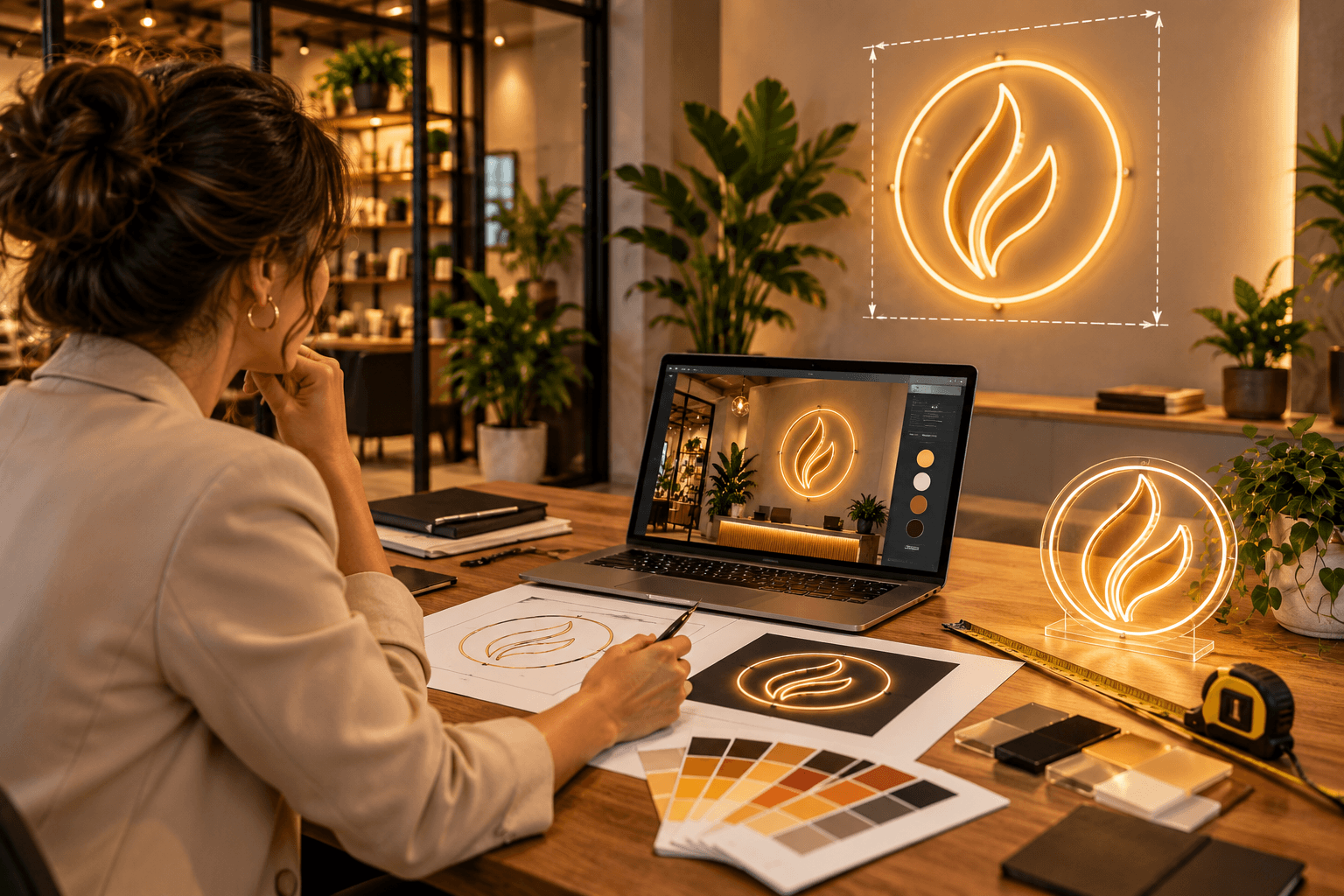
· Logo readability: the main name or symbol should still be clear when viewed from the expected customer distance.
· Finished dimensions: confirm width, height, and backboard size, not width alone.
· Artwork suitability: very small text, gradients, shadows, and fine details may need simplification.
· Indoor or outdoor use: exterior signs need suitable construction, cables, power components, and mounting hardware.
· Color expectations: glowing LED colors may look different from printed Pantone, CMYK, or HEX colors.
· Power and cable route: know where the outlet is and where the cable will exit the sign.
· Mounting method: wall standoffs, hanging hardware, or another system should suit the surface and sign weight.
· Supplier support: get a digital proof, written specifications, warranty details, installation information, and a clear quote before production.
For a broader pre-purchase review, use this custom neon sign buying checklist before paying a deposit or approving the final mockup.
Can Any Business Logo Be Turned Into an LED Neon Sign?
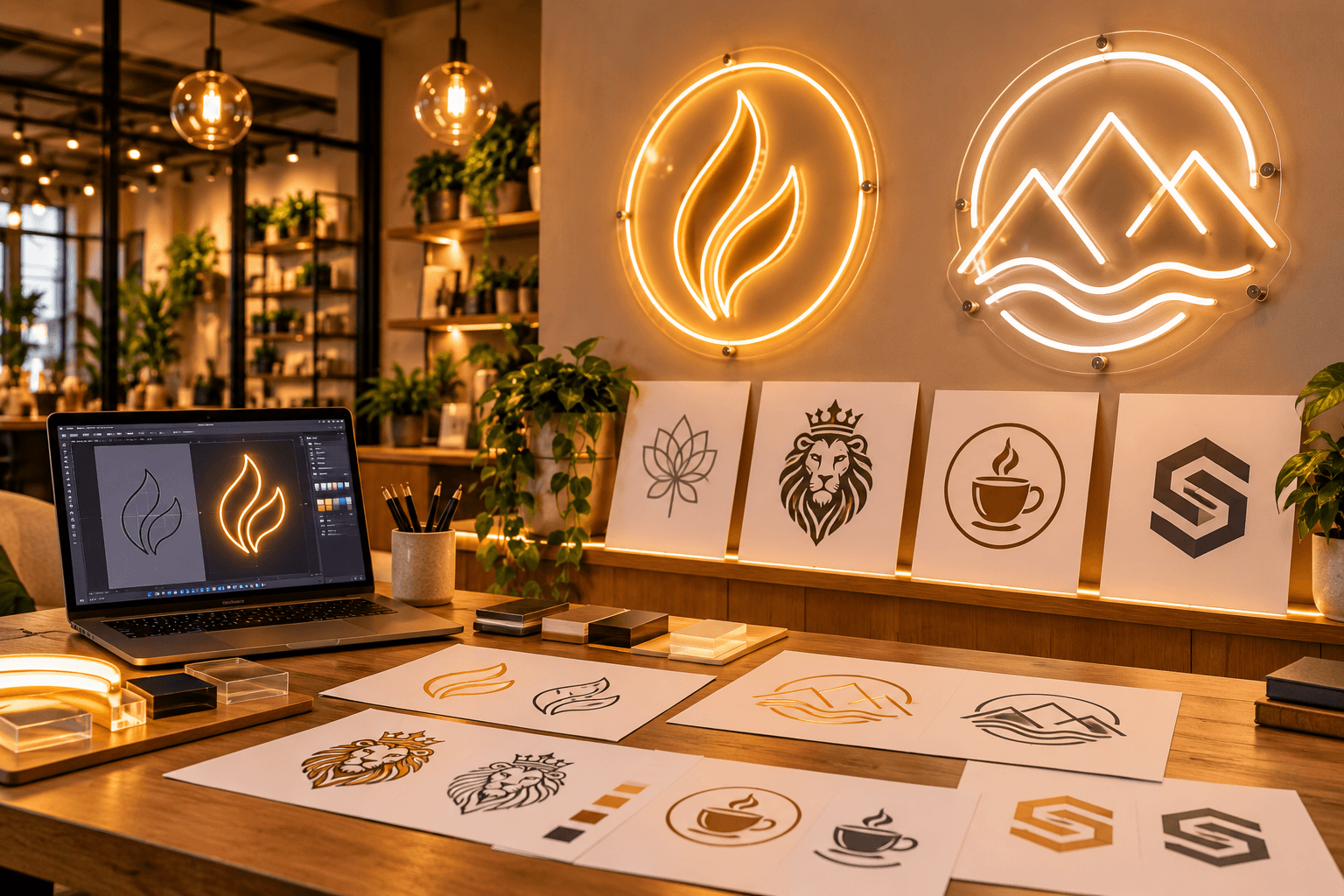
Most logos can be adapted, but the amount of adjustment varies. Clean wordmarks, bold outlines, simple icons, and limited color palettes are usually easier to reproduce. Complex brand marks may need selected details enlarged, removed, printed on the acrylic, or represented with fewer illuminated lines.
|
Logo feature |
Usually works well |
May need adjustment |
|
Lettering |
Large, open lettering with clear spacing |
Tiny text, thin serifs, tightly connected script |
|
Shapes |
Bold icons and clean outlines |
Very small shapes, tight corners, crowded details |
|
Color |
One to three solid colors |
Gradients, shadows, metallic effects, many overlapping colors |
|
Artwork |
Vector logo or high-resolution transparent PNG |
Screenshots, compressed social images, photos of printed material |
|
Tagline |
Short tagline at a suitable sign size |
Long tagline under a small logo |
When should a logo be simplified?
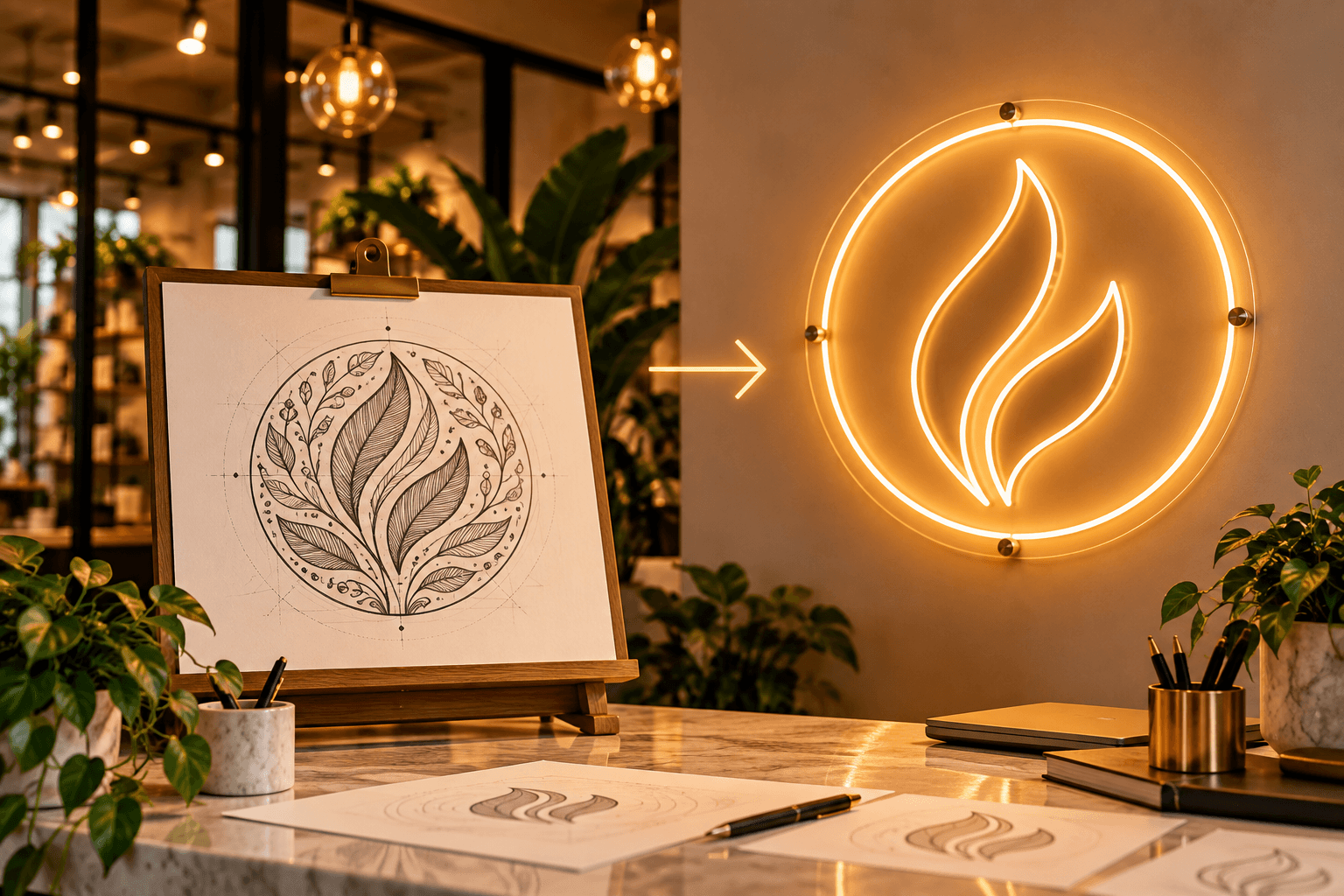
Simplification is useful when a detail looks clear on a phone or website but would become crowded when recreated as physical illuminated tubing. The goal is to preserve the part of the logo customers recognize first, not to redesign the brand.
· Enlarge small lettering or remove a secondary tagline.
· Increase spacing between nearby strokes.
· Reduce the number of illuminated colors.
· Use one clear outline instead of several decorative lines.
· Print highly detailed artwork on the backboard and illuminate the main name or symbol.
For logos with fine artwork, review this guide on how to simplify a detailed logo for LED neon before approving production.
Choose the Sign Size From Viewing Distance, Not Wall Width Alone
A sign can fit perfectly on a wall and still fail as business signage if customers cannot read it from the point where they first see it. Start with the normal viewing position, then work backward to the sign size.
1. Photograph the installation area from the customer’s normal approach.
2. Measure the usable wall or window area.
3. Estimate how far away customers will be when they need to read the logo.
4. Check whether window glare, tinted glass, nearby lighting, or displays compete with the sign.
5. Ask for the final artwork at the proposed size so you can judge letter spacing and logo clarity before production.
A reception logo viewed from a few feet away can use finer detail than a storefront logo viewed across a parking area. For general sizing decisions, see what size neon sign should you choose.
Where Does a Logo Neon Sign Work Best?
Match the placement to the business goal. A storefront sign needs quick recognition. A reception sign can prioritize brand presentation. A photo wall needs enough open space around the logo for people and cameras.
|
Business use |
Best placement |
Main priority |
Useful page |
|
Gym or fitness studio |
Reception, mirror wall, workout-zone entrance |
Strong visibility and clear logo shape |
|
|
Restaurant or café |
Entrance, host area, photo wall |
Readable branding without competing with menus |
|
|
Salon or beauty space |
Reception, styling area, photo wall |
Clean brand presentation and photo-friendly placement |
|
|
Event or exhibition |
Booth wall, sponsor wall, stage backdrop |
Portability, visibility, cable planning |
Indoor vs. Outdoor Logo Signs: What Changes?
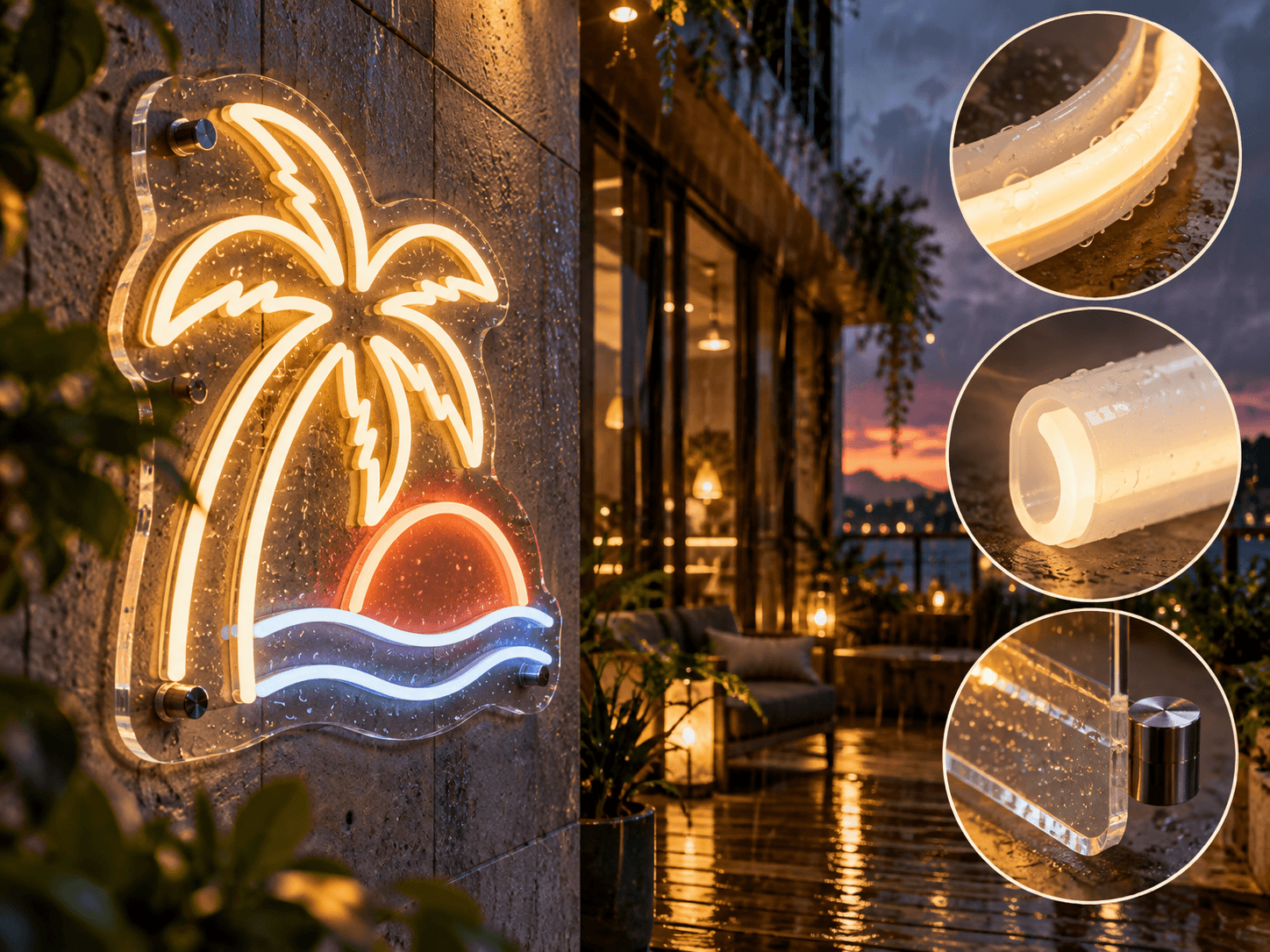
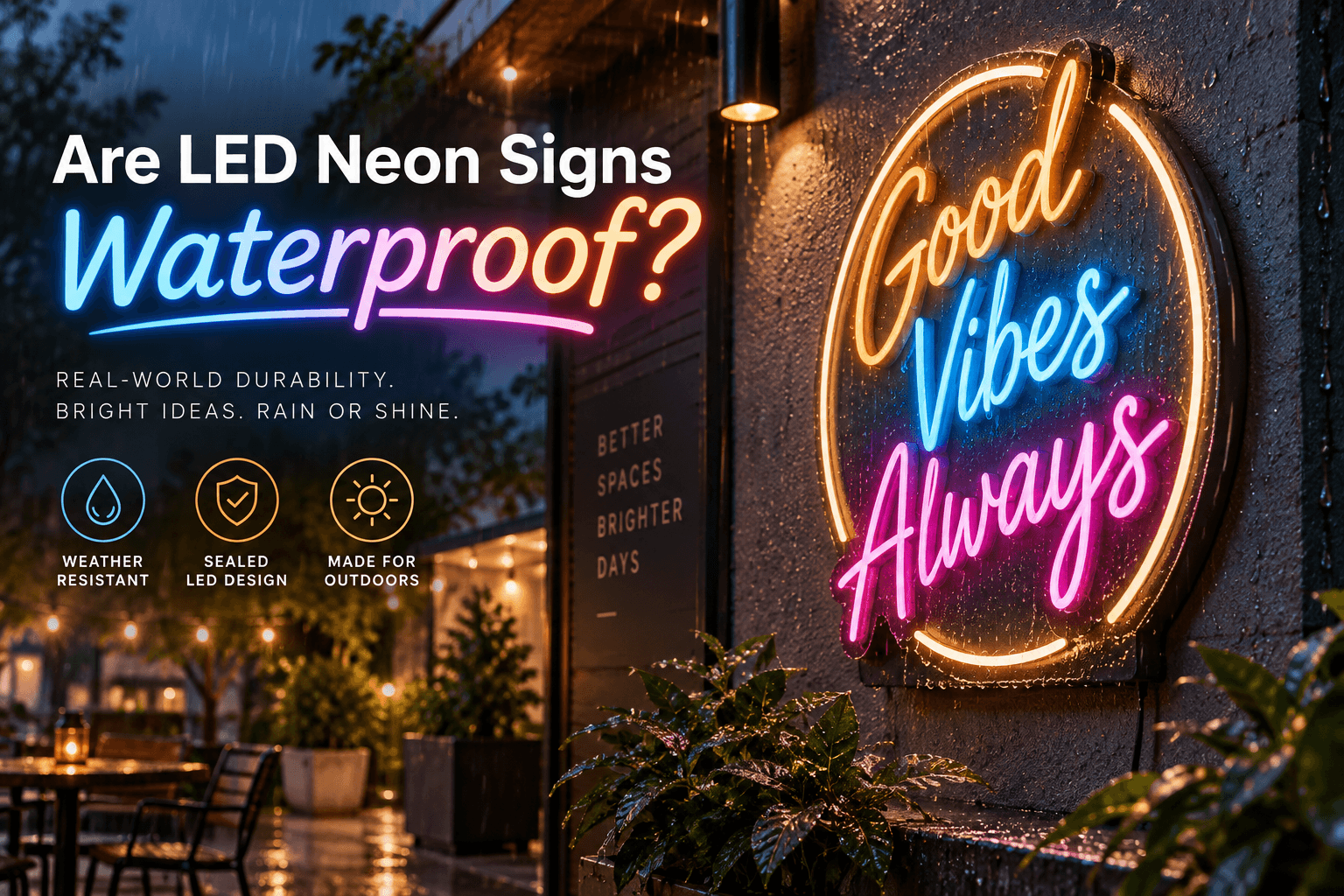
Do not assume an indoor LED logo sign can be moved outside later. Exterior installations may face rain, humidity, sunlight, temperature changes, wind, and stricter mounting requirements. The complete sign system—not only the LED tubing—needs to suit the location.
|
Decision point |
Indoor installation |
Outdoor installation |
|
Electrical parts |
Indoor-rated adapter and connections |
Suitable outdoor-rated components and protected connections |
|
Mounting |
Standard wall or hanging hardware may be sufficient |
Hardware should suit weather exposure and mounting surface |
|
Brightness |
Balanced against indoor ambient lighting |
May need stronger daytime visibility |
|
Approval |
Often property or landlord approval |
May involve landlord, property, local sign, or permit rules |
|
Location check |
Outlet, cable route, wall material |
Weather exposure, drainage, cable protection, wall material |
Ask the supplier to confirm the intended use in writing, especially for partially covered entrances or window installations that may still be exposed to moisture or heat.
What Files and Brand Details Should You Send?
A clean source file reduces guesswork during proofing. Vector artwork is usually the best starting point because it can be resized without losing edge quality. If vector artwork is unavailable, send the highest-resolution logo file you have.
· Original vector file such as AI, EPS, SVG, or editable PDF when available.
· High-resolution PNG with a transparent background if vector artwork is unavailable.
· Brand color references such as Pantone, CMYK, RGB, or HEX.
· Preferred finished width and height.
· Installation location and viewing distance.
· Indoor or outdoor use.
· Wall or window measurements.
· Preferred backboard shape and cable exit direction.
· Target delivery date and any installation deadline.
If you are unsure what to send, review the best file format for a custom neon logo sign before submitting artwork.
Will the Neon Color Match Your Brand Exactly?
Printed brand colors and glowing LED colors are different media, so an exact visual match is not always possible. Ask the supplier to show the closest available illuminated color in the proof or product samples. Also consider the wall color and room lighting because they change how the glow appears.
For multi-color logos, choose which parts must remain brand-specific and which can be simplified. A smaller sign often benefits from fewer illuminated colors because the logo is easier to read.
See the neon colors guide when comparing warm, cool, and high-contrast options.
What Affects the Cost of a Custom Business Logo Neon Sign?
The price should be treated as a custom quote rather than a fixed rate. Logo signs can cost more than simple text signs because the design may require more bends, multiple colors, shaped backing, larger dimensions, or special installation requirements.
|
Cost factor |
Why it changes the quote |
|
Finished dimensions |
Larger signs require more LED material, backing, packaging, and shipping space. |
|
Logo complexity |
More bends, separate sections, fine details, or several colors take more design and production work. |
|
Backboard style |
Cut-to-shape, cut-to-letter, or larger acrylic panels change material and fabrication needs. |
|
Indoor vs. outdoor build |
Outdoor use may require different construction, components, or sealing. |
|
Accessories |
Dimmers, remotes, hanging kits, stands, and special mounting hardware can affect the total. |
|
Shipping deadline |
Rush production or expedited delivery can increase cost. |
For cost planning, review what affects custom neon sign cost and request an itemized quote so you can see what is included.
Do Not Approve the Mockup Until You Check These Details
· Business name spelling and logo orientation are correct.
· The main logo remains recognizable after any simplification.
· Letter spacing is open enough to read at the expected distance.
· Finished width, height, and backboard dimensions fit the installation area.
· LED colors are close enough to the intended brand appearance.
· The cable exits from a practical side of the sign.
· Mounting holes or hanging points suit the intended wall or display.
· Indoor/outdoor specification matches the real installation location.
· The quote lists included accessories, shipping, and any revision limits.
A dedicated custom neon sign mockup approval checklist can help prevent expensive changes after production begins.
How to Compare Suppliers Before You Buy
Do not compare suppliers using price and product photos alone. Ask the same questions of each company so the quotes are easier to compare.
|
Supplier check |
What to ask |
Why it matters |
|
Proofing |
How many revisions are included before production? |
You need a chance to fix spacing, sizing, and color issues. |
|
Materials |
What LED tubing, backing, adapter, and mounting hardware are supplied? |
The full product affects durability, installation, and appearance. |
|
Warranty |
What parts are covered and for how long? |
Coverage terms matter if LEDs, adapters, or controllers fail. |
|
Replacement parts |
Can the adapter, dimmer, or controller be replaced separately? |
Serviceable parts can reduce downtime. |
|
Lead time |
When does production start, and what can delay delivery? |
Important for store openings, campaigns, and events. |
Get 25% OFF on All ProductsCode:NEON25View Offers!
Neon Collection50% OFF